

“Form follows function” is the design principle asserting that a desk’s shape, materials, and proportions should be governed by its intended purpose, with aesthetic appeal emerging naturally from those functional requirements. Architect Louis Sullivan coined the phrase in the late 19th century, and modern furniture designers have since carried it into the workspace. The principle is not a call to strip desks of beauty. It is a call to let beauty grow from usefulness. For anyone researching why form follows function desks consistently outperform style-first alternatives in real work environments, the answer lives in ergonomics, spatial clarity, and the organic relationship between how a desk looks and how it actually performs.
Why form follows function desks became the standard
The phrase “form follows function” originated with Louis Sullivan, the American architect who believed that design should serve purpose first, with beauty as an organic byproduct rather than applied decoration. Sullivan was writing about skyscrapers, but the logic transferred directly to furniture within decades.
Early 20th century designers applied the idea strictly. Ornament was waste. A desk needed a flat surface, storage, and structural support. Nothing more. That strict reading produced furniture that was honest but cold. By mid-century, designers began softening the rule without abandoning it.
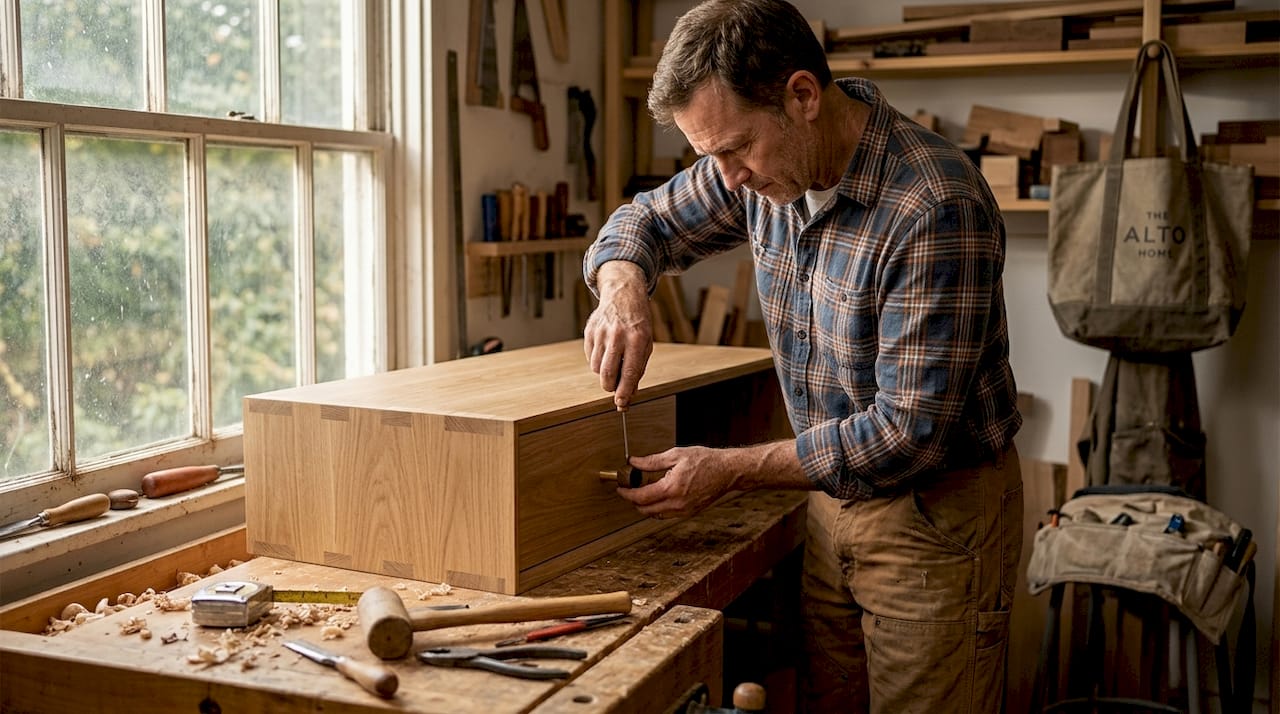
The shift produced something more useful: a view of form and function as a nested, interrelated system where form communicates intention, function supports daily life, and flow dictates how a person moves through a space. A desk designed under this updated model does not just hold a laptop. It signals focus, supports posture, and fits the room without fighting it.
Modern workspace furniture inherited this evolution directly. The result is a design philosophy in furniture that rejects superfluous ornamentation while still producing objects that are genuinely beautiful. The key insight is that beauty and function are not in competition. When function leads, beauty follows without effort.
Key shifts in the principle’s evolution:
- Sullivan’s original intent: reject decoration that serves no structural purpose
- Mid-century revision: allow form to express warmth and human scale, not just efficiency
- Contemporary view: treat form, function, and spatial flow as one integrated system
- Workspace application: desk shape, height, and material all reflect ergonomic and behavioral needs
Why functionality is the foundation of good desk design
Function is the backbone of any successful design project. Without assessing how a person actually uses a desk, even the most visually striking piece fails to support productivity. This is not an opinion. It is the consistent finding of interior designers and ergonomics researchers who study workspace behavior.
Functionality in furniture breaks down into three concrete pillars for desks:
-
Physical ergonomics. Height adjustability is the clearest expression of function-first design. Height-adjustable desks express respect for health and thinking, reflecting a serious design ethos beyond mere trends. A desk locked at a fixed height forces the body to adapt to the furniture rather than the reverse. That adaptation produces neck strain, shoulder tension, and reduced focus over time.
-
Spatial flexibility. Remote and hybrid workers need desks that adapt to shifting tasks. A desk used for video calls in the morning and deep writing work in the afternoon requires different configurations. Spatial flexibility, through cable management, surface depth, and adjustable components, makes that shift possible without friction.
-
Visual clarity. Minimalist desk designs reduce cognitive load. A cluttered surface competes for attention. A clean, intentional workspace surface directs attention toward the work itself. Interior designer Bobby Berk makes this point directly: function drives form, and ignoring function produces furniture that feels like a “costume.” It looks the part but does not play it.
Pro Tip: Before buying any desk, map your actual daily tasks. List every device, tool, and habit that touches your workspace. A desk that cannot accommodate your real workflow will frustrate you within a week, regardless of how good it looks in the showroom.
For a practical starting point, The Alto Home’s guide on ergonomic home office setup walks through the specific measurements and configurations that support long-term comfort.
How aesthetic elements naturally arise from functional requirements
The most counterintuitive truth in desk design is this: the most beautiful desks are usually the most functional ones. Aesthetic workspace design does not require a separate creative effort layered on top of engineering. It emerges from the engineering itself.
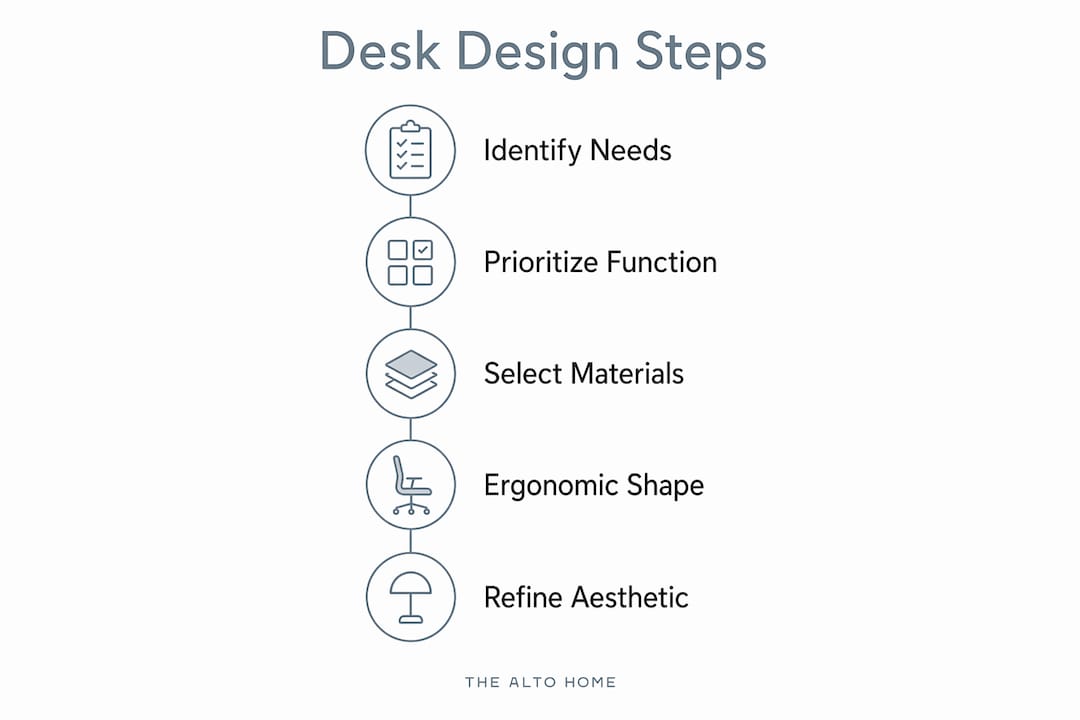
Consider desk shape. A surface with rounded front edges exists because sharp edges cut into forearms during long typing sessions. That curve is an ergonomic solution. It also happens to look softer, more considered, and more refined than a square-edged alternative. The form followed the function, and the result is more attractive.
The same logic applies to materials. Solid wood desks communicate warmth and permanence because wood is genuinely durable and stable. The visual impact of office furniture influences mood, professionalism, and perceived stability. A wood surface that ages well and resists warping is not just practical. It reads as trustworthy and grounded, which is exactly the mood a focused workspace needs.
The table below shows how specific functional requirements produce specific aesthetic outcomes in desk design:
| Functional requirement | Design response | Aesthetic outcome |
|---|---|---|
| Forearm support during typing | Rounded front edge | Softer, more refined silhouette |
| Cable management | Integrated routing channels | Cleaner, uncluttered surface |
| Height adjustability | Motorized column base | Minimal, architectural leg profile |
| Surface stability | Solid wood or engineered top | Warm, substantial visual presence |
| Reduced visual noise | Minimal hardware and flush joints | Calm, focused aesthetic |
Avoiding superficial ornamentation is not the same as avoiding beauty. Purposeful design produces objects that look exactly as capable as they are. The Alto Home’s Gramercy Fluted Wood Standing Desk is a clear example: the fluted wood detail is structural texture, not decoration applied after the fact.
How modern technology shapes desk design today
Technology has expanded what “functional” means for a desk. In 2026, a desk that cannot accommodate a dual-monitor setup, a standing position, and a video call background is functionally incomplete for most remote workers. The form follows function principle now operates at a higher level of complexity.
Electric standing desks are the clearest expression of this shift. The motorized column base is not a design choice made for visual interest. It exists because height-adjustable desks support movement and mental flexibility throughout the workday. The form of the base, typically a clean vertical column or an angled leg, reflects the mechanical requirement for smooth vertical travel.
Mobility features follow the same logic. Truly functional mobile desks are engineered from the ground up for stability and ease of movement, not retrofitted with wheels as an afterthought. When mobility is a first principle, the entire structure changes. The base widens for stability. The locking mechanism integrates flush with the leg. The result looks intentional because it is.
Parametric design adds another layer. Digital algorithms adjust interconnected structural elements to optimize load distribution and durability. A desk designed with parametric tools is stronger where it needs to be and lighter where it can afford to be. That structural honesty shows up in the final form.
Key ways technology reinforces the principle in modern desks:
- Electric height adjustment built into the base structure, not added on top of it
- Integrated cable management channels designed before the surface, not cut in afterward
- Mobility hardware engineered as primary structural elements
- Material selection guided by load data, not just visual preference
Pro Tip: When evaluating an adjustable desk, test the transition between sitting and standing heights before buying. A desk that wobbles at standing height has a structural problem, not just a comfort problem. Stability is a functional requirement, and it shows in the form.
Common misconceptions about form vs function in desk design
The biggest misconception in form vs function in design is that the two are in opposition. Buyers often assume they must choose: either a desk that looks good or one that works well. That framing is wrong, and it leads to poor purchases in both directions.
The first failure mode is buying a desk for looks alone. A desk with a beautiful wood top, elegant tapered legs, and no cable management will frustrate any remote worker within days. Cords pile up on the surface. The fixed height strains the neck. The shallow depth cannot hold a monitor at the correct distance. Designs that sacrifice ergonomics for looks fail long term, regardless of how well they photograph.
The second failure mode is buying a purely utilitarian desk and assuming aesthetics do not matter. They do. The visual environment of a workspace affects mood and motivation. A desk that looks institutional and cold produces a different mental state than one that looks considered and warm. Aesthetic workspace design is not vanity. It is environmental psychology applied to furniture.
“Ignoring function leads to furniture that feels like a costume. It looks the part but does not play it. The most beautiful desk in the room is the one that disappears into your workflow.” — Bobby Berk, interior designer
Balancing personal style with ergonomic needs is not a compromise. It is the actual goal of good desk design. The form follows function principle, applied correctly, produces desks that satisfy both requirements at once because the aesthetic grows from the functional solution.
Key Takeaways
A desk designed around function first will always outperform a desk designed around appearance first, because ergonomics, spatial clarity, and material honesty produce both better performance and better aesthetics.
| Point | Details |
|---|---|
| Function precedes form | Identify your real workflow needs before evaluating any desk’s appearance. |
| Ergonomics drive shape | Rounded edges, adjustable heights, and cable routing exist for physical reasons that also improve visual design. |
| Aesthetics emerge naturally | Beautiful desks are usually the most functional ones; ornamentation added after the fact signals weak design. |
| Technology raises the bar | Electric adjustment and integrated mobility must be engineered as first principles, not retrofitted features. |
| Style and function are not opposites | A desk that looks good and works well is the standard outcome of function-first design, not a lucky exception. |
The desk principle that never goes out of style
I have spent years watching the home office furniture market cycle through trends. Waterfall edges, live-edge slabs, ultra-thin floating surfaces. Each wave arrives with strong visual identity and fades when people realize the desk does not actually work for them.
The desks that last in people’s homes and in design history are the ones built around how humans actually sit, reach, type, and think. Height adjustability is not a feature. It is a statement that the designer took the human body seriously. That seriousness shows up in every proportion of the desk, from the leg clearance to the surface depth to the finish that does not show every fingerprint.
What I find most interesting about the current moment is that hybrid work has forced a reckoning. People now spend enough time at their desks to feel the consequences of bad design in their bodies. A desk that looked fine in a showroom becomes a problem after six hours of daily use. That feedback loop is accelerating the adoption of function-first design in ways that no design movement ever could.
My honest recommendation: treat your desk as infrastructure, not decoration. Choose it the way you would choose a good chair or a good mattress. The minimalist home office desk that serves you best will also be the one you stop noticing, because it disappears into your work. That invisibility is the highest compliment a desk can receive.
— Kevin O’Gara
The Alto Home’s approach to function-first desk design
The Alto Home builds desks that take the form follows function principle seriously at the material level.
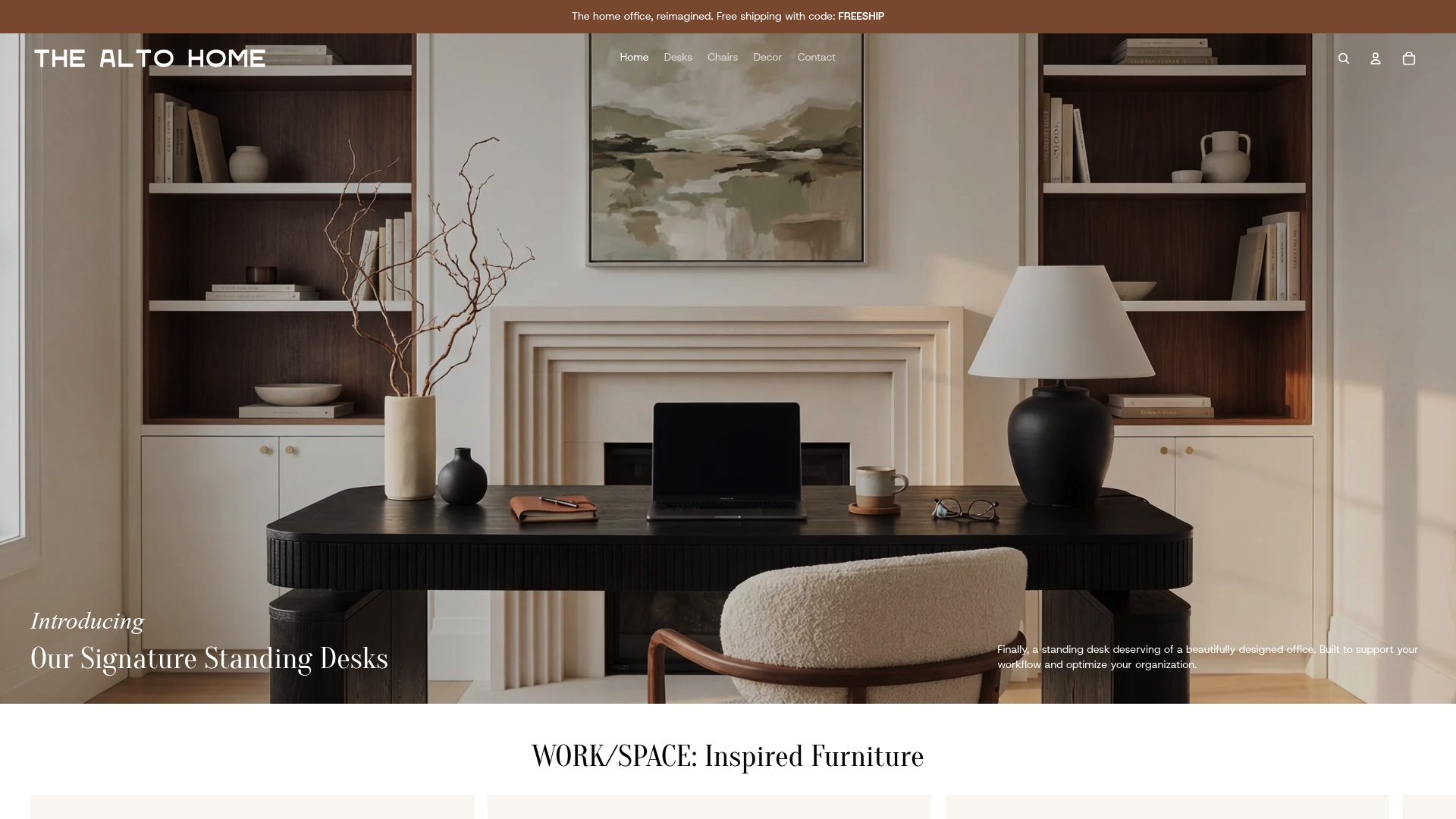
The Gramercy and Tribeca standing desks use solid wood construction and electric height adjustment as structural commitments, not marketing features. The wood species and finishes are selected for durability and visual warmth, both of which serve the user’s long-term experience. The adjustable height mechanism is integrated into the base design from the start, which is why the leg profiles look clean rather than mechanical. For anyone ready to put the principle into practice, The Alto Home’s full collection of modern home office furniture shows what function-first design looks like across a complete workspace.
FAQ
What does “form follows function” mean for desks?
“Form follows function” means a desk’s shape, size, and materials should be determined by how it will be used, with visual appeal emerging from those functional decisions rather than being applied separately.
Why does ergonomics matter in desk design?
Ergonomics determines whether a desk supports or strains the body over long work sessions. Height adjustability, surface depth, and edge profiles are all ergonomic decisions that also define the desk’s visual character.
Can a desk be both beautiful and functional?
A desk designed around function first is almost always more beautiful than one designed around appearance first. Purposeful design produces clean lines, honest materials, and proportions that look right because they work right.
What is the biggest mistake when choosing a desk?
The biggest mistake is prioritizing visual appeal over workflow fit. A desk that cannot accommodate your devices, posture needs, and daily habits will frustrate you regardless of how well it looks in the room.
How do adjustable standing desks reflect the form follows function principle?
Adjustable standing desks express the principle directly: the motorized base exists to serve human health and movement, and its clean architectural form is a result of that engineering requirement, not a separate styling decision.
