

Modern desk design is defined as furniture built on clean rectilinear lines, honest materials, and functional minimalism, where every element serves a purpose and nothing is decorative for its own sake. This approach to contemporary desk design has become the standard for home offices and professional workspaces alike, driven by the shift toward remote work, ergonomic awareness, and technology integration. What separates a genuinely modern desk from a traditional one goes far deeper than surface aesthetics. Understanding what is considered modern desk design means examining materials, construction methods, ergonomic capability, and how a desk functions within a real workspace. This article covers all of it.
What is considered modern desk design?
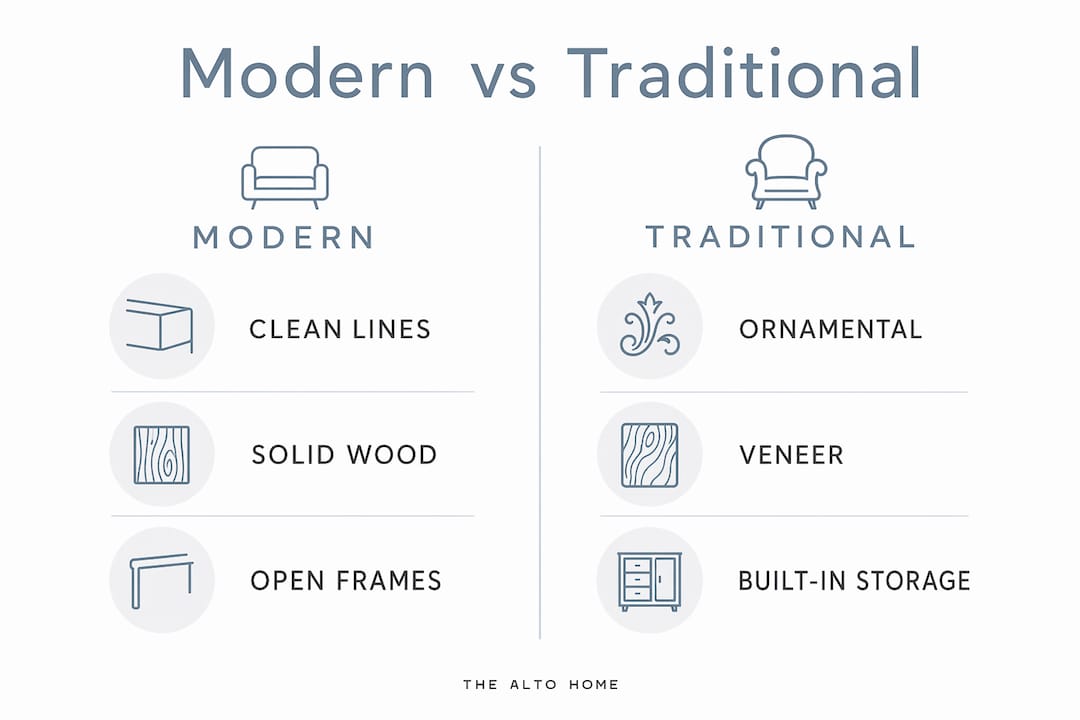
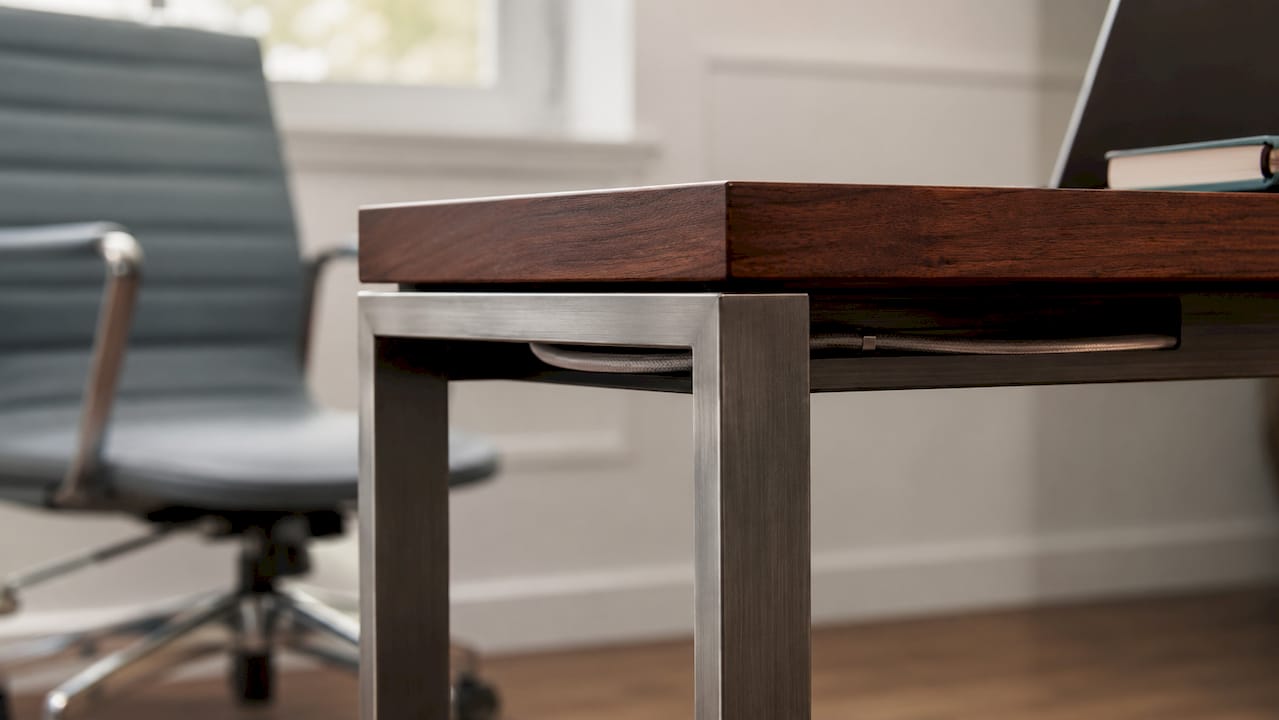
Modern desk design is characterized by clean lines and honest materials like solid hardwood tops and hand-welded steel bases, with no decorative moldings or box pedestals. That single principle separates contemporary desk design from traditional executive furniture more clearly than any other factor. Traditional desks rely on ornamentation to signal quality. Modern desks rely on proportion, material integrity, and visible natural texture.
The term “contemporary desk design” is used interchangeably with modern desk design in most furniture contexts, though technically contemporary refers to what is current right now, while modern has roots in the mid-20th century Modernist movement. Both share the same core vocabulary: restraint, function, and material honesty. For practical purposes, when professionals and home office workers search for modern desk styles, they are looking for the same set of characteristics regardless of which term they use.
The Alto Home builds its entire product philosophy around this principle. The Gramercy and Tribeca series use solid wood construction and distinct finishes that let the material speak for itself, without veneers or artificial staining to simulate quality that is not there.
What materials and construction define modern desk design?
Solid hardwood and steel are the two defining materials of quality modern desk construction. Solid hardwood tops like walnut, oak, and maple show visible grain patterns that veneer cannot replicate. Hand-welded steel bases provide structural integrity without the bulk of traditional wood pedestals. The contrast between warm wood and cool metal is not just aesthetic. It reflects a design philosophy that values material truth over surface treatment.
Traditional desks typically use veneer over particleboard, stained to mimic premium wood. The difference shows up over time. Veneer chips, stain fades unevenly, and the desk loses its visual integrity within a few years. Solid hardwood ages well and can be refinished. Understanding wood finish options matters here because the finish applied to solid wood determines both durability and how the grain reads in a room.
Modern desk finishes favor natural or matte treatments over high-gloss lacquers. A natural oil finish on walnut, for example, deepens the grain without creating a plastic-looking surface. High-gloss finishes, common in traditional furniture, reflect light in ways that draw attention to the surface rather than the form. Matte and satin finishes keep the visual focus on proportion and shape.
Pro Tip: When evaluating a desk’s material quality, check the underside and back edges. Solid wood shows consistent grain throughout. Veneer over particleboard reveals a flat, uniform core with no grain variation at the edges.
How does modern desk design incorporate ergonomic and technological features?
Ergonomic adaptability is now a core feature of modern desk design, not an optional upgrade. Height-adjustable sit-stand desks typically range from 62cm to 127cm, covering users from 5’ to 6’4". Programmable presets let workers switch between sitting and standing positions without manual adjustment, which removes friction and makes the habit sustainable. The ergonomic benefit is real: alternating postures throughout the day reduces the physical strain of static sitting.
Motor quality separates functional height-adjustable desks from frustrating ones. Stability at maximum height is the most common failure point. At full extension, a poorly engineered leg frame wobbles under the weight of monitors and peripherals. A minimum load capacity of 100kg is the benchmark for quality motorized desks. Below that threshold, the desk may handle a laptop but will struggle with a dual-monitor setup and speakers.
Technology integration defines the best modern desk styles in 2026. The features that matter most include:
- Built-in cable management: Integrated routing channels and grommets keep cables off the surface and out of sight.
- Hidden USB ports: Flush-mounted charging ports on the desk surface eliminate the need for external hubs.
- Wireless charging pads: Surface-integrated charging removes cables from the equation entirely for compatible devices.
- Programmable height presets: One-touch buttons that recall saved heights make sit-stand habits effortless.
- Anti-collision sensors: Motorized desks with obstacle detection prevent damage when the desk descends onto an object.
Integrated cable management is not cosmetic. Without planned cable routing, a minimalist desk surface becomes a tangle of wires within a week. The clean aesthetic that defines modern desk design depends entirely on the desk being engineered to handle cables before they become a problem.
Pro Tip: Prioritize your ergonomic chair before selecting a desk. The chair sets your seated height, which determines the desk height you need. Choosing the desk first often leads to a mismatch that no amount of adjustment can fully correct.
What modern desk styles are popular and what are their practical applications?
The most widely used modern desk configurations each solve a specific workspace problem. Understanding which style fits your situation prevents the common mistake of choosing based on appearance alone.
-
L-shaped desks: The best choice for corner spaces and multitasking. L-shaped desks in 2026 are used for professional zone separation, with one wing dedicated to digital work and the other to analog tasks like writing or reviewing documents. They maximize corners that would otherwise go unused. The best L-shaped desks for home office setups combine this spatial efficiency with height-adjustable frames, giving the full ergonomic benefit across a larger surface area. Assembly typically requires at least two hours and a second person to align the frame correctly.
-
Minimalist rectangular desks: The most versatile configuration. A single surface with a clean steel base works in any room size and pairs with any interior style. This is the default choice for focused single-monitor setups or standing desk configurations where surface area is not the priority.
-
Wall-mounted desks: The right solution for small rooms. A wall-mounted surface with no legs creates the illusion of more floor space and works well in dual-purpose rooms. The trade-off is fixed height, which eliminates ergonomic adjustability unless a wall-mounted lift mechanism is used.
-
Modular desks: The most flexible option for evolving workspaces. Modular office furniture allows workers to reconfigure their setup as their needs change, adding surface area, storage, or shelving without replacing the entire desk. This approach suits professionals whose work volume and equipment change over time.
| Style | Best for | Key trade-off |
|---|---|---|
| L-shaped | Multitasking, corner spaces | Requires more room and assembly time |
| Rectangular | Focused work, small rooms | Limited surface area for complex setups |
| Wall-mounted | Small or dual-purpose rooms | Fixed height, no ergonomic adjustment |
| Modular | Evolving or growing workspaces | Higher upfront cost for full system |
For home offices that serve dual purposes, the L-shaped configuration is particularly effective because it creates a physical boundary between work and non-work activities within the same room.
How does modern desk design compare to traditional desk design?
Modern and traditional desks reflect fundamentally different priorities, not just different aesthetics. Traditional executive desks use built-in pedestals, drawers, and ornamental details to signal authority and permanence. Modern desks use open frames, minimal storage, and clean surfaces to signal flexibility and efficiency. Neither is objectively better. The choice depends on what the workspace needs to communicate and how it needs to function.
Modern desks project a future-ready identity defined by flexibility, technical efficiency, and spatial lightness. Traditional desks project authority and heritage. For a home office used for video calls with clients, the desk visible in the background communicates something about the professional behind it. That signal is worth considering deliberately.
| Feature | Modern desk | Traditional desk |
|---|---|---|
| Lines | Rectilinear, minimal | Curved, ornamental |
| Materials | Solid wood, steel, glass | Veneer, stained wood, brass hardware |
| Storage | External or minimal | Built-in drawers and pedestals |
| Finish | Natural, matte, or satin | High-gloss lacquer or dark stain |
| Workspace feel | Open, light, flexible | Enclosed, formal, permanent |
The functional difference shows up in daily use. Traditional desks with built-in storage feel organized but fixed. Modern desks with open surfaces feel flexible but require external storage solutions. The negative space in modern desk design is intentional. Open surface area reduces visual clutter and keeps the focus on the work rather than the furniture.
What practical considerations should buyers keep in mind?
Matching desk size to room dimensions is the first practical decision, and most buyers get it wrong by choosing too large. A desk that fills a room creates a workspace that feels cramped rather than productive. The desk surface should provide enough area for your actual equipment, with clear space remaining on at least one side.
Weight capacity matters more than most buyers realize. Motor noise and weight capacity are the key differentiators between budget and quality motorized desks. A dual-monitor setup with a desktop computer, speakers, and peripherals can easily reach 40–50kg. A desk rated for 100kg handles that load with stability to spare. A desk rated for 60kg operates near its limit, which accelerates wear on the motor and frame.
Cable management deserves attention before purchase, not after. A desk with no integrated routing forces external solutions that undermine the clean aesthetic. Check for grommets, under-desk cable trays, and routing channels in the frame before committing to a model.
Assembly complexity is a real factor for L-shaped and motorized desks. Large configurations require a second person and a clear floor area. Budget two to three hours for a motorized L-shaped desk and read the full assembly instructions before starting.
Pro Tip: Price-to-quality ratio in motorized desks correlates directly with engineering quality. Mid-to-high-tier desks in the $600–$900+ range offer quieter motors, more stable frames, and longer warranties. The cost difference pays for itself within the first year of daily use.
Key Takeaways
Modern desk design combines material honesty, ergonomic adaptability, and technology integration to create workspaces that function as well as they look.
| Point | Details |
|---|---|
| Material honesty defines quality | Solid hardwood and steel outperform veneer in durability, appearance, and long-term value. |
| Ergonomics require engineering | A minimum 100kg load capacity and stable leg frame are non-negotiable for motorized desks. |
| Cable management is structural | Integrated routing channels are a design feature, not an accessory, in quality modern desks. |
| Style choice follows function | L-shaped desks suit multitasking; rectangular suits focused work; modular suits evolving needs. |
| Chair comes before desk | Setting ergonomic chair height first determines the correct desk height and surface area needed. |
Why modern desk design is more than a style choice
The conversation about modern desk design usually starts with aesthetics and stops there. That is a mistake I have seen professionals make repeatedly. They choose a desk because it looks good in a showroom or a product photo, then spend months working on a surface that does not fit their actual habits.
What I have found after years of observing how people actually use their workspaces is that the design decisions that matter most are invisible in photos. Motor stability at full extension. The quality of cable routing. Whether the wood finish holds up after two years of daily contact. These are the details that determine whether a desk serves you or frustrates you.
The shift toward modern desk styles is not just aesthetic trend-following. It reflects a genuine change in how people work. Flexibility matters more than permanence. Technology integration matters more than storage. The ability to stand, sit, and reconfigure matters more than the authority projected by a heavy mahogany pedestal desk.
Sustainability is the next frontier in this space. Solid hardwood from responsibly managed sources ages better, refinishes rather than replacing, and carries a lower long-term environmental cost than veneer furniture that ends up in a landfill after five years. The material choices that define modern desk design also happen to be the more sustainable ones. That alignment is not accidental.
My honest advice: buy less desk than you think you need, buy better materials than you think you can afford, and treat cable management as a design requirement rather than an afterthought.
— Kevin O’Gara
The Alto Home’s approach to modern desk design
The Alto Home builds desks that take the principles of contemporary desk design seriously at every level, from the solid wood surface to the engineered steel base.
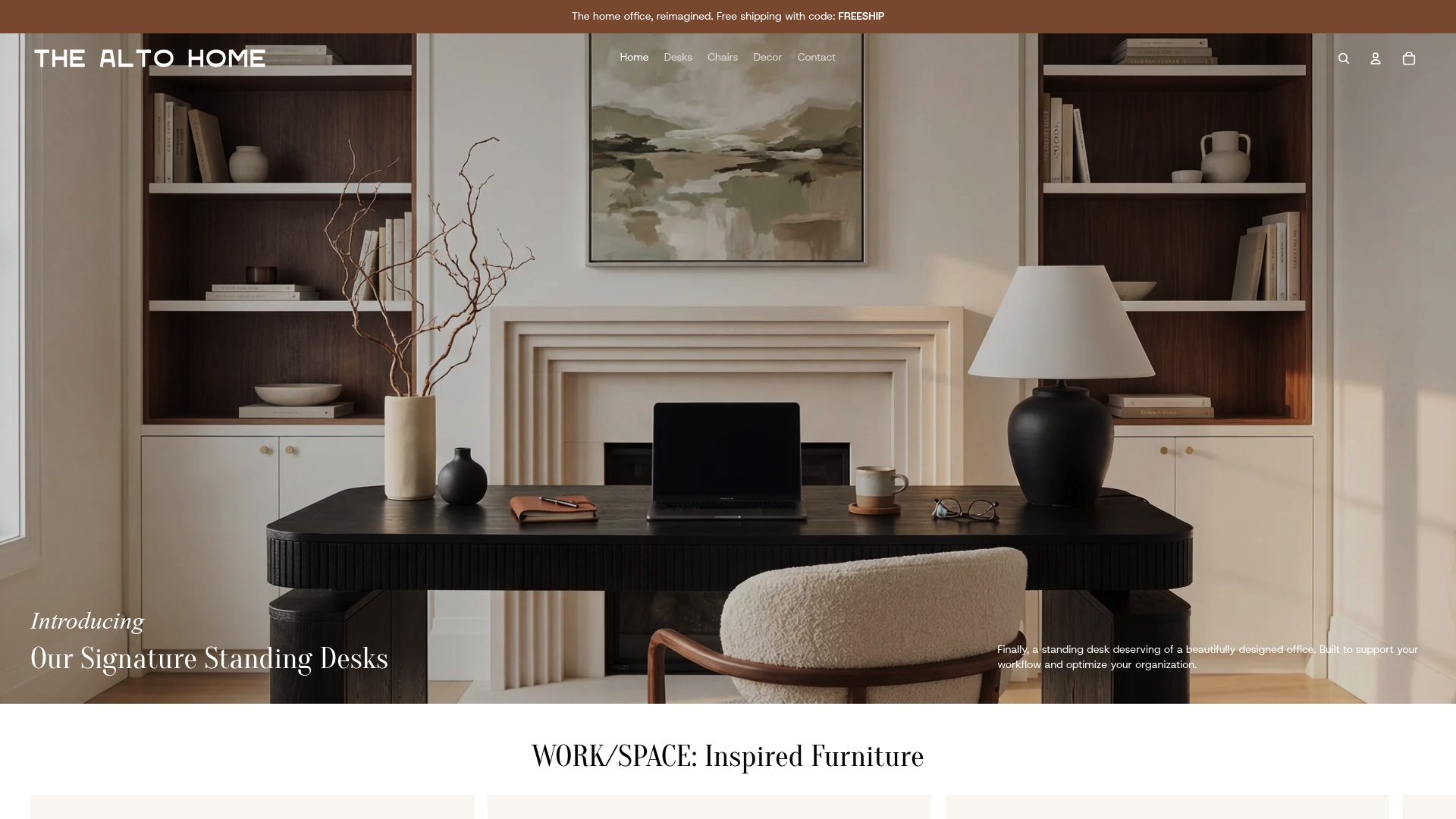
The Greenwich Rotating Wood Standing Desk combines solid hardwood construction with motorized height adjustment, giving you the ergonomic flexibility of a sit-stand desk without sacrificing the material quality that defines genuine modern design. The Gramercy Fluted Wood Standing Desk and Tribeca Mid-Century Wood Standing Desk extend the same philosophy into distinct aesthetic directions, each crafted for professionals who want a workspace that reflects real design thinking. Explore the full adjustable height desk collection to find the configuration that fits your space and work style.
FAQ
What defines a modern desk versus a traditional desk?
Modern desks use clean lines, solid materials, and open frames with no decorative moldings or built-in pedestals. Traditional desks rely on ornamentation, veneer finishes, and enclosed storage to signal quality and authority.
What materials are used in modern desk design?
Solid hardwood tops, such as walnut or oak, paired with hand-welded steel bases are the standard materials in quality modern desk construction. These materials prioritize visible natural texture over veneer or stained finishes.
Are L-shaped desks considered modern?
L-shaped desks are a popular modern desk style when built with clean frames and quality materials. They suit multitasking and corner spaces, with one wing for digital work and one for analog tasks.
What height range do modern adjustable desks cover?
Most motorized modern desks adjust from 62cm to 127cm, supporting users from 5’ to 6’4". Programmable presets are a standard feature on quality models.
How important is cable management in modern desk design?
Integrated cable management is a core design feature, not an optional add-on. Without planned routing channels and grommets, the clean surface aesthetic that defines modern desk design breaks down immediately in daily use.
