

Modular office furniture is a system of standardized, interchangeable components, including desks, panels, storage units, and seating, designed to be assembled, disassembled, and reconfigured as needs change. The Cambridge English Dictionary defines “modular” as made of several parts that can be put together in different ways. That definition captures exactly why this furniture category has become the default choice for offices that need to adapt quickly. Whether you manage a corporate floor or a home office, modular systems give you control over your space without calling a contractor.
What is modular office furniture and how does it work?
Modular office furniture works on a “kit of parts” principle. Each component, whether a desk surface, a storage cabinet, a partition panel, or a lounge seat, shares standardized dimensions and connector types. That shared standard is what makes the system work. You can add a new workstation to an existing bench cluster, swap a panel for a taller privacy screen, or pull apart a team pod into individual stations, all without tools in many cases.

The key mechanism is interface compatibility. Connectors, panel heights, and surface depths follow consistent specs across a product line. This means a desk you buy today can physically join with a storage unit you add next year. Interface compatibility is the single most important spec to check before committing to a system, because mismatched connectors lock you into a static layout.
Common modular furniture elements include:
- Workstations and benching systems: Individual desks that link together into shared bench clusters
- Partition panels: Freestanding or desk-mounted screens that divide space without permanent walls
- Storage units: Under-desk pedestals, overhead lockers, and mobile cabinets that integrate with desk frames
- Lounge and collaborative seating: Modular sofas and ottomans that reconfigure into different group arrangements
Pro Tip: Before purchasing, ask your vendor for a compatibility matrix. This document lists which components from different product generations can connect. Skipping this step is the most common reason teams end up with mismatched furniture after an expansion.
What are the key benefits of modular office furniture?
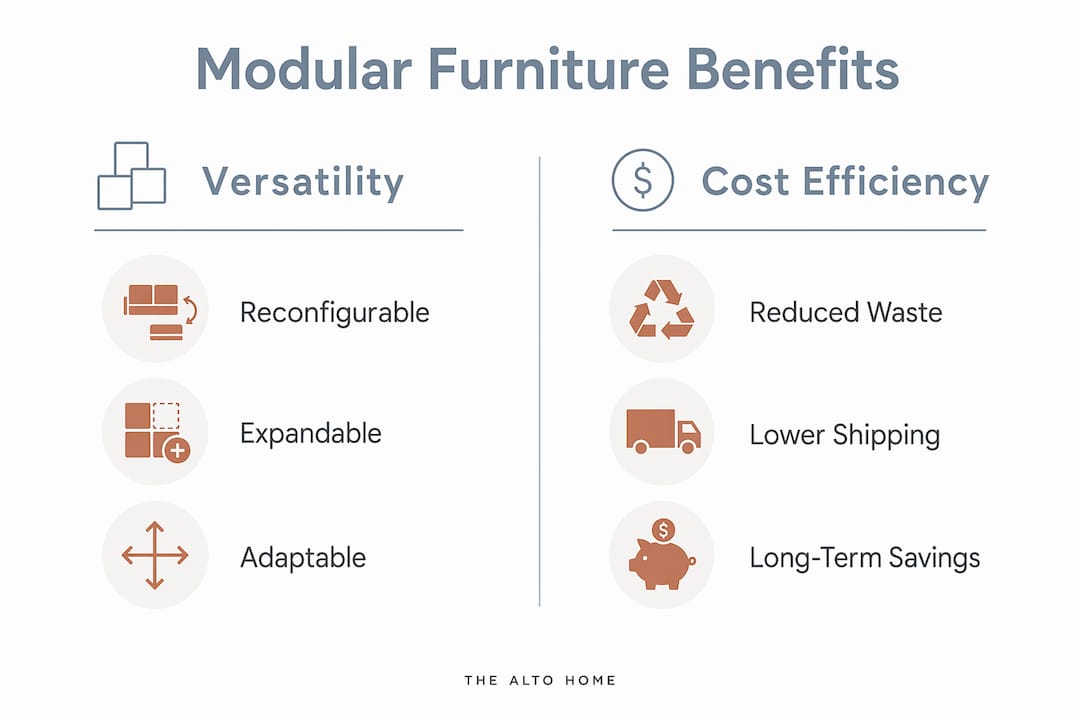
The most practical benefit of modular systems is speed of change. Reconfiguration happens in minutes, not days, because no structural building work is required. A team that grows from eight to twelve people does not need a renovation. They add compatible components to the existing cluster and the layout expands.
The benefits stack up across several dimensions:
- Rapid reconfiguration: Furniture clusters ungroup into individual stations or recombine freely, a capability that distinguishes modular systems from standalone workstations that are merely movable.
- Scalability: You expand or contract a workspace by adding or removing compatible components instead of replacing everything. Shared finishes and connector standards keep the visual result consistent.
- Activity-based zoning: Modular workplace furniture supports operational zoning, enabling teams to shift between collaborative areas and quiet focus zones by reconfiguring layouts rather than rebuilding rooms.
- Cost efficiency: Buying additional compatible components costs far less than a full furniture replacement or a construction project. The system grows with you rather than becoming obsolete.
- Sustainability: Because components are reused and reconfigured rather than discarded, modular systems produce less waste over time than fixed furniture that gets thrown out during a redesign.
The zoning benefit deserves more attention than it typically gets. Most offices treat furniture as static background. Modular systems let you treat furniture as an active tool for shaping how work actually happens. A morning standup area becomes an afternoon focus zone by moving three panels and a bench. That kind of flexibility directly affects office culture and productivity.
Modular furniture vs. modular office architecture: what’s the difference?
These two terms get confused constantly, and the confusion leads to wrong purchasing decisions. They describe fundamentally different things.
Modular furniture refers to individual pieces, desks, seating, panels, storage, that share compatible connectors and can be rearranged within a space. The floor plan stays the same. Only the furniture layout changes.
Modular office architecture refers to pre-fabricated volumetric modules or office pods assembled on-site. These are spatial units, not furniture pieces. A ROOM pod, for example, is a self-contained meeting room or phone booth built in a factory and delivered ready to use. It changes the physical footprint of a space, not just the furniture arrangement.
| Feature | Modular furniture | Modular office architecture |
|---|---|---|
| What changes | Layout within a fixed floor plan | Physical spatial footprint |
| Assembly | Components connect via shared fittings | Volumetric units assembled on-site |
| Examples | Benching systems, partition panels | Office pods, prefab meeting rooms |
| Structural work required | No | Minimal, but more than furniture |
| Cost level | Lower | Significantly higher |
A stricter construction definition states that a module must be volumetric, prefabricated, and functionally autonomous, capable of integration via standardized and reversible interfaces. That definition applies to architectural modules, not furniture. Knowing the difference prevents you from expecting a furniture system to do the job of a construction project, or overspending on pods when a reconfigurable bench system would solve the problem.
Modular furniture categories worth knowing:
- Freestanding desks and benching: The most common entry point for modular setups
- Panel-based systems: Panels carry surfaces, storage, and power, creating self-contained workstations
- Lounge and collaborative modules: Soft seating units that connect to form different group configurations
- Storage towers and mobile pedestals: Vertical storage that integrates with desk frames
How to design with modular office furniture effectively
The biggest design mistake is treating modular furniture as a furniture purchase rather than an infrastructure decision. The furniture is only as flexible as the power and data setup behind it.
Fixed trunking and floor boxes undermine reconfiguration because they anchor furniture to specific positions. Integrated cable management built into desk surfaces and panels keeps power accessible regardless of where components move. Pop-up power modules and wireless charging zones extend that flexibility further. Plan your power and data routes before you finalize any furniture layout.
Practical design considerations:
- Choose components with matching finishes: Visual consistency across desk surfaces, panel fabrics, and storage fronts makes a modular system look intentional rather than assembled from leftovers.
- Standardize panel heights within zones: Mixing panel heights randomly breaks sightlines and makes the space feel chaotic. Use taller panels for focus zones and lower panels for collaborative areas.
- Plan for growth from day one: Buy slightly more connectivity capacity than you currently need. Adding a power spine later is far more disruptive than installing one upfront.
- Evaluate vendor compatibility documentation: Ask specifically whether components from different product generations connect. Some vendors update connector specs between releases, which breaks backward compatibility.
Pro Tip: For home offices, modular furniture works especially well in dual-purpose rooms. A compact benching desk with a mobile storage pedestal can define a work zone in a bedroom or living room without permanent construction. The Alto Home’s guide on designing dual-purpose rooms covers this approach in detail.
Hybrid workers benefit from modular setups in a specific way. A home office built on modular components can shift from a solo focus station in the morning to a video call setup in the afternoon by moving one panel and repositioning a monitor arm. That kind of micro-reconfiguration is exactly what the system is designed for. Pairing a modular desk with the right desk accessories sharpens that daily flexibility further.
Key Takeaways
Modular office furniture is a system of compatible, interchangeable components that lets businesses and individuals reconfigure their workspace without structural changes or full furniture replacements.
| Point | Details |
|---|---|
| Core definition | Modular furniture uses standardized connectors and dimensions to allow reconfiguration without renovation. |
| Interface compatibility | Check connector and finish compatibility before buying to avoid mismatches during future expansions. |
| Furniture vs. architecture | Modular furniture changes layouts; modular office pods change physical spatial footprints. These are different products. |
| Power and data planning | Avoid fixed trunking. Use integrated cable management to keep reconfiguration options open long-term. |
| Zoning capability | Modular systems enable activity-based working by letting teams shift between collaborative and focus zones quickly. |
Why modular furniture is the infrastructure decision most offices get wrong
I’ve watched offices spend significant money on modular furniture systems and then immediately undercut the investment by hardwiring power into fixed floor positions. The furniture becomes modular in name only. You can move the desk, but the power cord pulls it right back to the same spot.
The offices that get the most value from modular systems treat the furniture and the infrastructure as one decision, not two. They run power through the panel spine, not the floor. They choose wireless charging zones over fixed outlets wherever possible. They think about where the team will be in three years, not just where they sit today.
Post-pandemic hybrid work has accelerated adoption of modular systems, but the underlying reason is simpler than a trend. Work modes change faster than buildings do. A team that does deep focus work on Tuesdays and collaborative sprints on Thursdays needs a space that can shift with them. Modular furniture is the only furniture category built to do that. The mistake is buying it for the aesthetics and ignoring the operational logic that makes it worth the investment.
— Kevin O’Gara
Standing desks that fit a modular workspace
The Alto Home designs standing desks built for exactly the kind of flexible, intentional workspace that modular thinking demands.
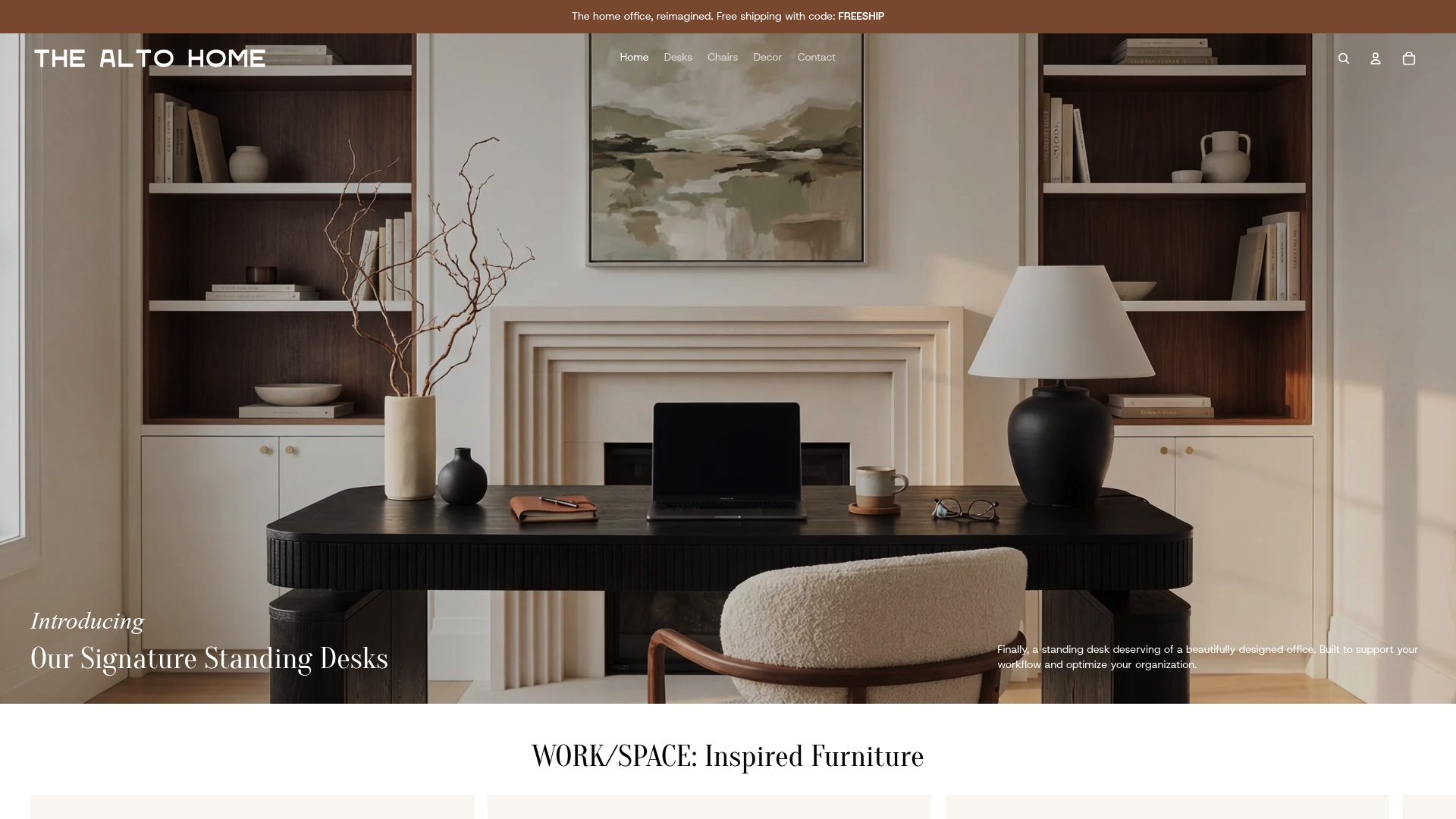
The Greenwich Rotating Wood Standing Desk combines adjustable height with a rotating surface, making it a natural anchor for a modular home office setup. The Gramercy Fluted Wood Standing Desk brings a distinct finish that holds its own in styled interiors without sacrificing ergonomic function. Pair either desk with the Felix Upholstered Desk Chair for a setup that moves between focus and comfort throughout the day. The full collection of adjustable height standing desks from The Alto Home is worth a look if you’re building a workspace that needs to do more than one thing well.
FAQ
What is the modular furniture definition in simple terms?
Modular furniture is a set of components with shared connectors and dimensions that can be combined, separated, and rearranged into different configurations. The Cambridge English Dictionary defines “modular” as made of parts that can be put together in different ways.
How is modular office furniture different from regular office furniture?
Regular office furniture consists of standalone pieces with no shared connector standard. Modular systems use compatible fittings that let components join, separate, and reconfigure without structural changes, which standalone pieces cannot do.
What types of modular office furniture exist?
The main types include benching and workstation systems, panel-based desk systems, modular lounge and collaborative seating, and integrated storage units such as mobile pedestals and overhead lockers.
Is modular office furniture worth it for a home office?
Yes. Modular components work well in small or dual-purpose spaces because they define a work zone without permanent construction. A desk with a mobile storage pedestal and a partition panel creates a functional office that folds back into a living space when needed.
What is the difference between modular furniture and modular office pods?
Modular furniture rearranges layouts within an existing floor plan. Modular office pods, such as ROOM phone booths or prefab meeting rooms, are volumetric, factory-built spatial units that change the physical footprint of a space. They serve different purposes and come at very different price points.
