

Sustainable office furniture is defined as products designed and manufactured to minimize environmental impact across their full lifecycle, from raw material sourcing through end-of-life disposal. The industry term for this practice is lifecycle sustainability, and it covers four core criteria: responsible material sourcing, low chemical emissions, energy-efficient manufacturing, and long-term durability. Certifications like GREENGUARD Gold, FSC, and BIFMA Level are the primary tools businesses use to verify these claims. For professionals making procurement decisions, understanding what is sustainable office furniture means going beyond surface-level “green” marketing and evaluating real, verifiable standards that affect both environmental outcomes and workplace health.
What are the sustainability standards and certifications for office furniture?
Certifications are the only reliable way to verify a sustainability claim. Without them, “eco-friendly” is a marketing phrase with no accountability behind it.
GREENGUARD Gold is the most meaningful certification for indoor air quality. GREENGUARD Gold products emit fewer than 360 individual VOCs, making them safe for sensitive populations including children and people with respiratory conditions. For office environments, this directly affects the air workers breathe for eight or more hours a day.

FSC (Forest Stewardship Council) certification confirms that wood was responsibly sourced and tracked from forest to finished product. FSC Chain of Custody labels appear in three forms: FSC 100%, FSC Recycled, and FSC MIX, each indicating a different level of certified content. Businesses can verify authenticity by requesting the FSC Chain of Custody license code on supplier invoices, formatted as FSC-C followed by six digits.
BIFMA Level evaluates a product’s full lifecycle sustainability, covering materials, energy use, human health, and social responsibility. It is the most comprehensive standard for commercial furniture procurement. LEED credits and ISO 14001 environmental management certification also influence procurement decisions, particularly for organizations with formal ESG reporting requirements.
Key certifications to request from any supplier:
- GREENGUARD Gold (indoor air quality and VOC limits)
- FSC Chain of Custody (responsible wood sourcing)
- BIFMA Level 1, 2, or 3 (lifecycle sustainability)
- ISO 14001 (manufacturer environmental management systems)
- LEED contribution documentation (for green building projects)
Pro Tip: When evaluating a supplier, ask for the FSC-C license code directly on the invoice. If they cannot provide it, the certification is unverified regardless of what the product label says.
Which materials qualify as sustainable office furniture?
Sustainable office furniture materials fall into three broad categories: certified wood products, recycled metals and plastics, and natural or recycled fabrics. Each carries distinct trade-offs in aesthetics, durability, and maintenance cost.
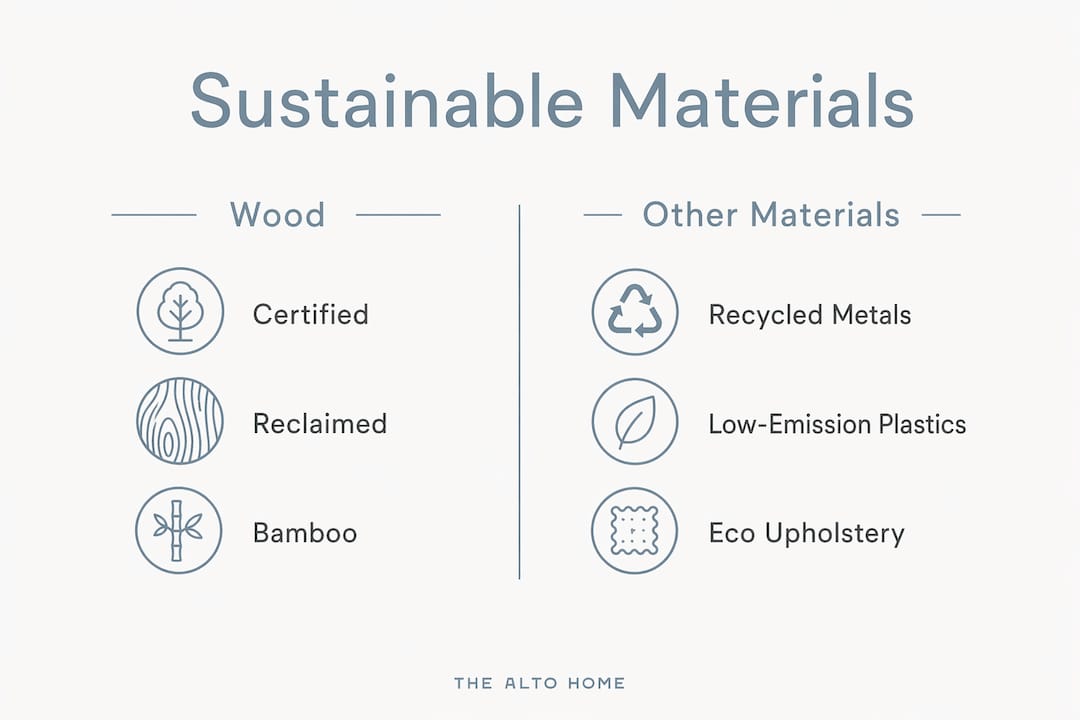
Certified and reclaimed wood
FSC-certified wood and reclaimed wood are the most recognizable sustainable materials in office furniture. Both offer strong aesthetics and a connection to natural materials that synthetic options cannot replicate. Natural wood desks provide superior visual appeal but require annual maintenance including oiling and refinishing. That maintenance cost is real and should factor into any total cost of ownership calculation. The Alto Home’s Gramercy and Tribeca desk lines use high-quality wood with distinct finishes, demonstrating that certified wood can meet both aesthetic and functional standards in professional settings.
Bamboo deserves separate mention. It grows to harvest maturity in three to five years compared to decades for hardwood, making it one of the most renewable structural materials available. It is also harder than most domestic hardwoods, which supports the 8–10 year functional lifespan that quality office furniture should meet.
Recycled metals and low-emission plastics
Powder-coated recycled steel and aluminum offer a lower maintenance alternative to wood. These materials resist scratching, moisture, and UV degradation without annual treatment. Their lifecycle performance often matches or exceeds wood over the same 8–10 year window, with significantly lower upkeep costs. Recycled content plastics, when sourced from post-consumer streams rather than virgin petroleum, reduce embodied carbon in the manufacturing process.
Eco-friendly upholstery
Natural fabrics like wool, organic cotton, and recycled polyester are the leading choices for sustainable seating upholstery. Bonded leather and budget synthetic fabrics degrade quickly and are not suitable for professional environments where durability is a baseline requirement.
| Material | Durability | Maintenance | Environmental benefit |
|---|---|---|---|
| FSC-certified wood | 8–10 years | Annual oiling and refinishing | Responsible forest management |
| Reclaimed wood | 8–10 years | Moderate, varies by condition | Diverts waste from landfill |
| Bamboo | 8–10 years | Low | Rapidly renewable resource |
| Powder-coated steel | 8–10 years | Very low | Recyclable at end of life |
| Recycled plastic | 5–8 years | Very low | Reduces virgin petroleum use |
| Natural fabric upholstery | 5–8 years | Moderate | Biodegradable or recyclable |
Pro Tip: For wood desk care that extends lifespan and reduces replacement frequency, follow a structured maintenance routine. The Alto Home’s wood desk maintenance guide covers exactly what annual upkeep looks like in practice.
How does sustainable office furniture affect employee well-being?
The business case for eco-friendly office furniture extends well beyond environmental responsibility. Offices incorporating sustainable and biophilic design see a 6% productivity increase and a 15% boost in employee well-being. That is not a marginal gain. Across a team of 50 people, a 6% productivity lift represents meaningful output without adding headcount.
The financial impact compounds further. Economic research estimates businesses save approximately $2,000 per employee annually from reduced absenteeism tied to improved indoor environments. Low-VOC materials, natural wood surfaces, and better air quality all contribute to that outcome. The connection between indoor air quality and cognitive performance is well established in occupational health research.
Biophilic design, which integrates natural materials, natural light, and organic forms into the workspace, amplifies these effects. Incorporating natural light alongside certified wood furniture and living plants creates an environment that reduces stress and supports sustained focus.
Practical ways to apply these principles in an office layout:
- Choose desks and shelving in FSC-certified or reclaimed wood to introduce natural texture
- Select GREENGUARD Gold certified seating to reduce chemical off-gassing at the workstation
- Position adjustable height desks near windows to combine movement with natural light exposure
- Use natural fiber rugs or acoustic panels made from recycled materials to improve sound quality
What should businesses consider when selecting sustainable office furniture?
Sustainable procurement is a lifecycle management process, not a one-time purchase decision. The most impactful choice a business can make is often not buying new furniture at all.
Refurbishing existing furniture reduces embodied carbon by up to 80% compared to manufacturing new pieces. That figure makes refurbishment the single highest-impact sustainability action available to most businesses. Before any new purchase, audit what can be repaired, reupholstered, or refinished.
When new purchases are necessary, follow this evaluation process:
- Verify certifications independently. Request FSC-C license codes on invoices and cross-check GREENGUARD Gold listings on the official UL database. Do not accept marketing copy as proof.
- Calculate total cost of ownership. A wood desk with annual maintenance costs more over ten years than a powder-coated metal desk with minimal upkeep. Factor in furniture total cost before comparing sticker prices.
- Prioritize modular designs. Furniture that can be reconfigured, expanded, or partially replaced supports circular economy principles and reduces waste when office layouts change.
- Assess manufacturer transparency. Sustainable furniture procurement is moving toward partnership models that emphasize supply chain transparency. Manufacturers who publish material sourcing data and third-party audit results are more credible than those who rely on self-reported claims.
- Plan for end-of-life. Ask suppliers whether products are designed for disassembly and whether take-back or recycling programs exist.
Pro Tip: Reusing 295,000 chairs annually can prevent 12,000 tonnes of CO2 emissions. If your office is replacing seating, explore certified refurbishers before ordering new stock.
Key Takeaways
Sustainable office furniture delivers measurable environmental, health, and financial returns only when certifications are verified, materials are chosen for durability, and lifecycle management replaces single-purchase thinking.
| Point | Details |
|---|---|
| Certifications are non-negotiable | Verify GREENGUARD Gold, FSC Chain of Custody, and BIFMA Level before any purchase. |
| Material choice drives long-term cost | FSC-certified wood, bamboo, and powder-coated steel each meet the 8–10 year durability benchmark with different maintenance demands. |
| Refurbishment beats replacement | Refurbishing existing furniture cuts embodied carbon by up to 80% compared to buying new. |
| Productivity gains are real | Sustainably designed offices show a 6% productivity increase and 15% well-being improvement. |
| Lifecycle thinking is the standard | Modular, repairable, and recyclable designs reduce waste and support circular economy goals. |
The certification gap nobody talks about
Most procurement guides stop at telling you which certifications to look for. What they skip is the uncomfortable reality that certification fraud and greenwashing are common enough to require active verification, not passive trust.
I have seen offices proudly display “FSC-certified” furniture where the supplier could not produce a single invoice with a valid FSC-C license code. The label looked right. The paperwork did not exist. That gap between marketing and documentation is where most businesses get caught.
The deeper issue is that manufacturer transparency is still the exception, not the norm. Genuine sustainability requires a partnership with suppliers who publish their sourcing data, submit to third-party audits, and design products for repair rather than replacement. That is a higher bar than most buyers set, and most suppliers meet.
My honest recommendation: treat the first purchase from any new supplier as a test. Request the FSC-C code. Cross-check the GREENGUARD Gold listing. Ask what happens to the product at end of life. A supplier who answers those questions clearly has earned a longer conversation. One who deflects has told you everything you need to know.
The productivity and well-being data is real, and it matters. But the environmental benefit only materializes if the certifications behind the furniture are genuine. Verify first. Buy second.
— Kevin O’Gara
The Alto Home’s approach to sustainable office furniture
The Alto Home builds its standing desk collections around the same principles this article covers: certified materials, durable construction, and design that holds up over years of daily use.
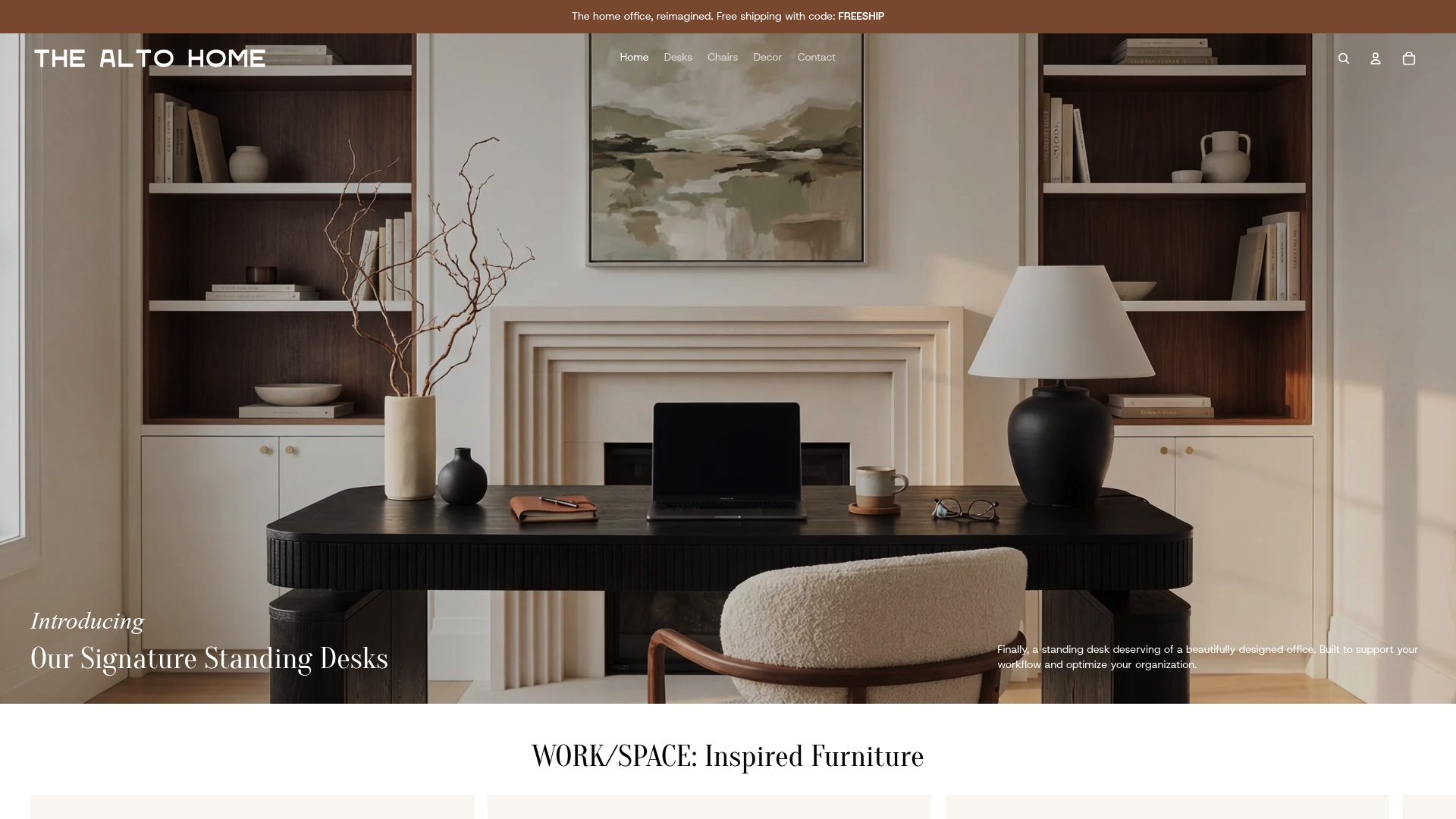
The Greenwich Rotating Wood Standing Desk and the Gramercy Fluted Wood Standing Desk use high-quality wood construction with finishes built for longevity, not just aesthetics. Both are designed for the kind of daily use that demands real durability. The Alto Home’s adjustable height standing desks combine ergonomic function with materials chosen to last, supporting both the health outcomes and the environmental goals that serious buyers are looking for. If you are building or upgrading a workspace with sustainability as a core requirement, the collections at The Alto Home are worth a close look.
FAQ
What is sustainable office furniture?
Sustainable office furniture refers to products designed to minimize environmental impact across their full lifecycle, including responsible material sourcing, low VOC emissions, energy-efficient manufacturing, and long-term durability. Key certifications include GREENGUARD Gold, FSC, and BIFMA Level.
Which certifications should I look for in eco-friendly office furniture?
GREENGUARD Gold and BIFMA Level are the most meaningful certifications for health and lifecycle sustainability. FSC Chain of Custody certification confirms responsible wood sourcing and can be verified by requesting the FSC-C license code on supplier invoices.
How long should sustainable office furniture last?
Quality sustainable office furniture should provide a minimum of 8–10 years of functional use. Short-lived materials like bonded leather and budget plastics do not meet this standard and are not appropriate for professional environments.
Does sustainable office furniture improve productivity?
Offices with sustainable and biophilic design show a 6% productivity increase and a 15% boost in employee well-being. Businesses also save approximately $2,000 per employee annually from reduced absenteeism linked to better indoor air quality.
Is refurbishing office furniture more sustainable than buying new?
Refurbishing existing furniture reduces embodied carbon by up to 80% compared to purchasing new pieces, making it the highest-impact sustainability choice available to most businesses before any new procurement begins.
