

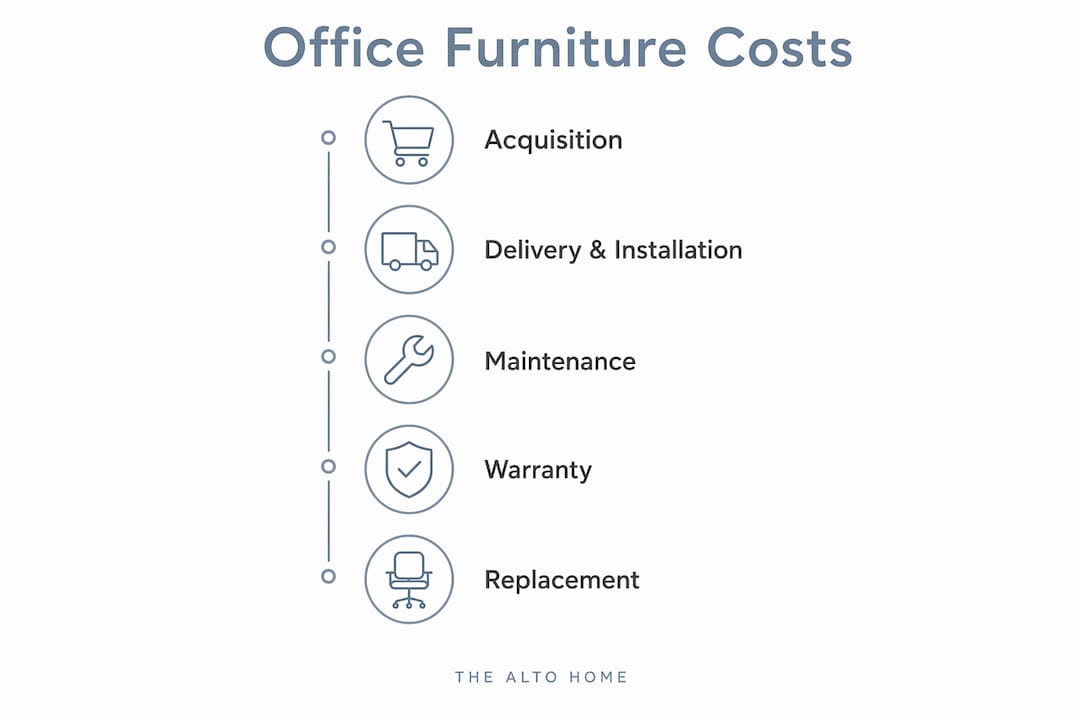
Office furniture total cost is defined as every dollar you spend to acquire, deliver, install, maintain, and eventually replace your furniture over its useful life. Most buyers focus on the sticker price and miss the full picture. The industry framework for capturing all of these expenses is called Total Cost of Ownership, or TCO. Understanding TCO before you sign a purchase order is the single most effective way to avoid budget surprises. This guide breaks down every cost layer so you can plan with confidence, whether you are furnishing a home office or a 200-seat commercial floor.
What factors influence the total cost of office furniture?
TCO is calculated by starting with the acquisition price, annualizing it over the expected service life, then adding maintenance, replacement parts, installation, service charges, and downtime costs. That formula reveals why two proposals with identical unit prices can produce very different final bills.
The hard costs you can see
The purchase price is the most visible number, but it is rarely the largest cost driver over a five-year period. Ergonomic chairs in the commercial market typically run $800–$1,200 each, and individual workstations land in the $1,500–$3,000 per seat range. Conference room setups commonly run $2,500–$8,000 depending on size and specification. These figures give you a starting point, but they represent only the product cost before anything is touched, moved, or assembled.

The soft costs that wreck budgets
Soft costs are the expenses that do not appear on a product invoice but show up on your final accounting. Freight, installation, warehousing, taxes, and professional fees typically add 8%–15% on top of your furniture spend. That means a $50,000 furniture order can carry an additional $4,000–$7,500 in costs before a single chair is sat in.
The full list of soft costs is longer than most buyers expect:
- Installation labor and assembly fees
- Packaging waste removal
- Out-of-hours delivery surcharges
- Local service availability and response time
- Spare parts sourcing and lead times
- Cleaning and routine maintenance
- Reconfiguration labor when layouts change
- Disposal and asset removal at end of life
These hidden costs often surprise buyers and can materially raise the total investment required. Ignoring them at the planning stage is the most common reason office furniture projects run over budget.
Warranties and maintenance as cost variables
Warranty value is not just about duration. Enforceability, labor coverage, claim processing ease, and response speed all affect how much downtime a broken chair or desk actually costs your business. A five-year warranty that requires you to ship parts overseas and wait six weeks is worth far less than a two-year warranty with next-day local service.
Pro Tip: Ask every supplier for a written breakdown of what their warranty covers: parts only, or parts plus labor? On-site service or depot repair? The answer changes the real value of the warranty significantly.
How to budget realistically for office furniture total costs
Realistic budgeting for office furniture starts with a category-by-category breakdown, not a single lump sum. Grouping costs by furniture type gives you control over where to spend and where to save.
-
Define your seat count and space. Count every workstation, conference seat, lounge area, and private office before you price anything. Furniture makes up roughly 15%–25% of total office fit-out budget, so knowing your total fit-out number first helps you set a realistic furniture ceiling.
-
Build a category budget. Separate your spend into desks, seating, conference furniture, storage, and ancillary pieces. Each category has a different price range and a different soft cost profile. Desks, for example, carry higher installation labor costs than storage units.
-
Add a soft cost buffer. Apply an 8%–15% buffer on top of your product subtotal to cover freight, installation, and fees. For large projects, delivery, installation, design, and project management can add 10%–20% on top of product-only totals. Use 15% as your default if you have no project-specific data.
-
Model for growth. If your headcount is likely to increase within 18 months, buy modular furniture now. Modular workstations reduce reconfiguration costs significantly when layouts change frequently, because components can be reused rather than replaced.
-
Separate capital and operating costs. Furniture purchased outright is a capital expenditure, depreciated over 5–7 years. Leased furniture is an operating expenditure, deductible in the year it is incurred. Knowing which bucket your spend falls into affects your tax planning and your approval process.
Pro Tip: Use a landed cost mindset when reviewing quotes. Add freight, installation labor, service setup charges, and eventual asset removal costs to every line item before comparing proposals. The cheapest product quote rarely produces the lowest total bill.
What are the main pricing tiers for office furniture?
The commercial furniture market divides into three tiers: value, mid-range, and premium. Each tier carries different implications for durability, warranty support, and total cost over time.
| Tier | Workstation cost per seat | Ergonomic chair cost | Warranty typical length | Best for |
|---|---|---|---|---|
| Value | $500–$1,000 | Under $400 | 1–2 years | Short-term or temporary setups |
| Mid-range | $1,000–$2,500 | $400–$800 | 3–5 years | Growing businesses, home offices |
| Premium | $2,500–$5,000+ | $800–$1,200+ | 5–12 years | High-use commercial environments |
Value tier furniture carries the lowest upfront cost but the highest replacement frequency. A value-tier chair that lasts three years and costs $300 is more expensive over six years than a mid-range chair that costs $600 and lasts eight years. Premium furniture often wins over cheaper alternatives due to longer usable life and better warranty support. The math is straightforward once you annualize the cost.
Volume purchasing changes the equation for larger projects. A 100-seat office furniture project can run roughly $200,000–$1,000,000+ depending on tier and scope. At that scale, negotiating volume discounts on mid-range furniture often delivers better TCO than buying value-tier pieces in bulk.
How does leasing versus buying affect your total furniture cost?
The decision to buy or lease office furniture is a financial structure question as much as a cost question. Furniture purchased outright is capital expenditure, depreciated over 5–7 years on your balance sheet. Leased furniture is operating expenditure, deductible immediately against revenue. That distinction affects your tax position, your cash flow, and how your finance team categorizes the spend.
Key differences to weigh before you commit:
- Cash flow. Leasing spreads cost over time, preserving capital for other investments. Buying requires a larger upfront outlay but eliminates monthly payments.
- Flexibility. Lease agreements often include refresh or upgrade options at term end. Owned furniture stays on your books until you dispose of it.
- Total cost. Leasing typically costs more in aggregate over the full term than outright purchase. The premium buys flexibility and cash flow management.
- Buyout options. Some lease structures include a nominal buyout at term end, effectively converting the lease into a purchase spread over time.
- Financial reporting. Capex and opex sit in different parts of your financial statements. Your CFO or accountant should confirm which treatment fits your reporting requirements before you sign.
Lowest unit price proposals often carry the highest total cost once soft costs and service factors are included. The same logic applies to lease versus buy: the option that looks cheaper on a monthly basis may not be cheaper when you add up all payments, maintenance obligations, and end-of-lease fees.
Key Takeaways
Accurate office furniture budgeting requires modeling acquisition price, soft costs, warranty value, and lifecycle replacement together, not in isolation.
| Point | Details |
|---|---|
| TCO beats sticker price | Calculate total cost of ownership by adding delivery, installation, maintenance, and replacement to the purchase price. |
| Soft costs add 8%–15% | Budget an explicit buffer for freight, installation labor, taxes, and disposal on every project. |
| Tier choice drives lifecycle cost | Premium furniture often costs less per year than value-tier pieces when annualized over their full service life. |
| Lease vs. buy changes your tax position | Owned furniture is depreciated over 5–7 years; leased furniture is deductible immediately as operating expenditure. |
| Modular furniture reduces reconfiguration cost | Offices with frequent layout changes recover more value from modular systems through component reuse. |
The cost mistake I see buyers make every time
Most buyers treat office furniture as a one-time purchase. They get three quotes, pick the lowest number, and move on. I have watched that decision cost businesses two and three times the original savings in replacement costs, installation fees, and productivity losses within 24 months.
The real problem is that procurement based on unit price alone produces poor outcomes. The supplier with the lowest chair price often has the weakest warranty, the slowest parts supply, and no local service network. When a chair fails at month 14 and the warranty claim takes eight weeks to process, the “savings” evaporate fast.
What I tell every buyer: ask for the warranty in writing before you order, not after. Confirm whether labor is covered or just parts. Ask where the nearest service technician is located. Ask how long replacement parts typically take to arrive. These questions take five minutes and can save you thousands.
The other mistake I see regularly is ignoring reconfiguration costs. A business that moves teams around every six months and bought fixed-panel workstations will spend more on reconfiguration labor in two years than the cost difference between those panels and a modular system. Separating your furniture budget from your tenant improvement budget early in the planning process forces you to confront these trade-offs before contracts are signed.
Buy for the life you expect your office to have, not the layout you have today.
— Kevin O’Gara
Well-designed desks that hold their value over time
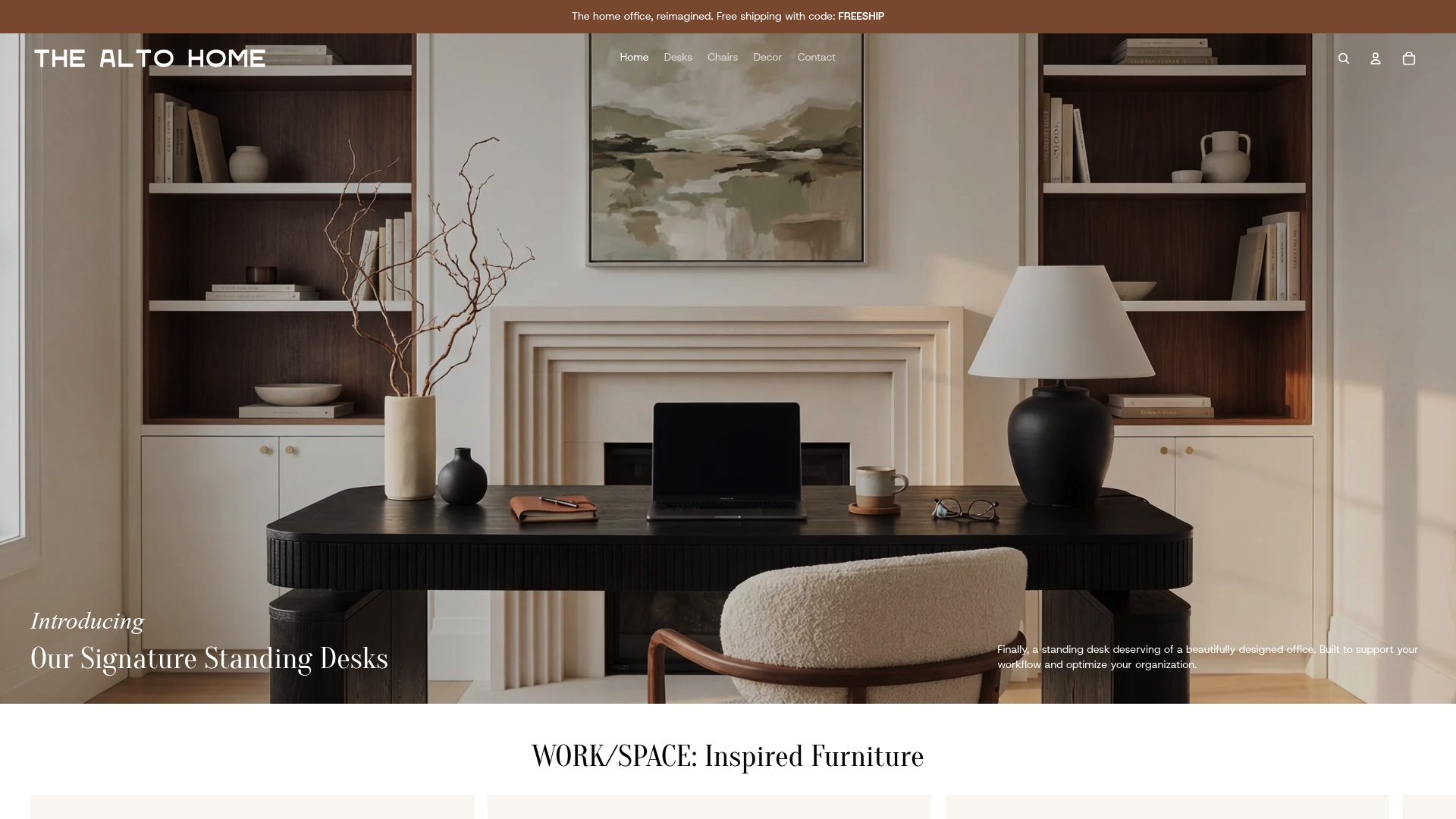
The Alto Home builds standing desks that are worth examining through a TCO lens. The Gramercy Fluted Wood Standing Desk and the Tribeca Mid-Century Wood Standing Desk are crafted from high-quality wood with finishes designed to last. Both feature adjustable heights, which means they adapt to how you work rather than forcing you to replace them when your needs change. For buyers who want a desk that functions as a long-term asset rather than a short-term purchase, The Alto Home’s adjustable standing desk collection is worth a close look. Pair a standing desk with one of The Alto Home’s modern office chairs to complete a workspace built for durability and daily comfort.
FAQ
What is included in office furniture total cost of ownership?
Total cost of ownership includes the purchase price plus delivery, installation, maintenance, warranty claims, replacement parts, and eventual disposal costs. Soft costs like freight and installation labor typically add 8%–15% on top of the product price.
How much should I budget per workstation for office furniture?
Commercial budget benchmarks run $1,500–$3,000 per seat for individual workstations and $2,500–$8,000 for conference room setups. Ergonomic chairs in the commercial range typically cost $800–$1,200 each.
Is office furniture a tax-deductible expense?
Purchased furniture is a capital expenditure, depreciated over 5–7 years. Leased furniture is an operating expenditure and deductible in the year the expense is incurred. Consult your accountant to confirm the treatment that applies to your situation.
What soft costs do buyers most often overlook?
Installation labor, packaging waste removal, out-of-hours delivery surcharges, spare parts sourcing, reconfiguration fees, and end-of-life disposal costs are the most commonly missed line items in office furniture budgets.
Does premium furniture actually cost less over time?
Premium furniture typically costs less per year than value-tier alternatives when you annualize the cost over the full service life. Longer warranties, better parts availability, and lower replacement frequency drive the savings.
