

Wood desk care and maintenance is the process of regularly cleaning, conditioning, and protecting your desk surface to prevent damage and preserve its appearance over time. A well-maintained wood desk resists warping, scratches, and fading far longer than one that receives only occasional attention. The right routine uses simple tools: microfiber cloths, mild soap, and wax or oil conditioners. Products like Howard Feed-N-Wax and Minwax Paste Finishing Wax are widely used by woodworking professionals and home office owners alike. Skip the routine, and even a high-quality hardwood desk will show its age within a few years.
What daily and weekly routines keep a wood desk clean without damage?
The safest daily habit is dusting with a soft, dry microfiber cloth. Routine dusting 2–3 times per week removes abrasive particles before they scratch the finish. Left on the surface, fine dust acts like sandpaper every time you move a notebook or keyboard across the desk.
For a deeper clean, use a lightly dampened cloth with a few drops of mild dish soap. Wring the cloth until it is nearly dry before touching the wood. Never soak a wood surface or leave standing moisture on it, since water penetrates the finish and causes swelling or white rings.
Dry the surface immediately after any damp wipe-down. A second dry microfiber cloth works well for this. Avoid glass cleaners, all-purpose sprays, and anything containing ammonia or bleach. These strip protective finishes and leave the raw wood exposed to humidity and stains.
- Dust with a dry microfiber cloth 2–3 times per week
- Wipe with a barely damp cloth and mild soap for light grime
- Dry the surface immediately after every damp wipe
- Never use glass cleaners, bleach, or ammonia-based sprays
- Clean spills the moment they happen, before they soak in
Pro Tip: Always wipe in the direction of the wood grain, not across it. Wiping against the grain pushes grime into the pores and creates micro-scratches that dull the finish over time.
How do you protect a wood desk from scratches, stains, and warping?
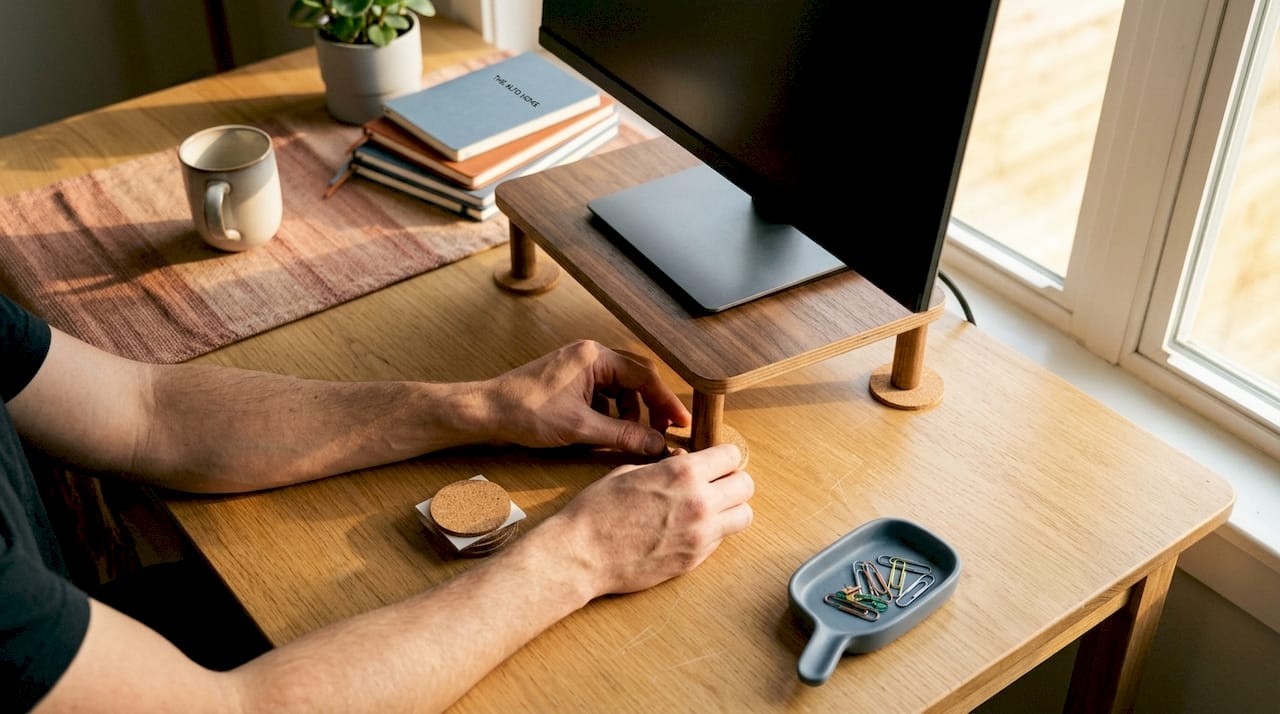
Physical barriers are the first line of defense. Coasters under mugs, felt pads under monitors and lamps, and placemats under notebooks prevent the rings, dents, and drag marks that accumulate invisibly over months. Desk surfaces face localized wear from keyboard and mouse use, so rotating your accessories every few months helps the finish age evenly rather than wearing thin in one spot.
Sunlight is a slower but equally destructive threat. Direct UV exposure fades wood tone and breaks down finish chemistry, sometimes within a single season near a south-facing window. Reposition your desk away from direct sun or use UV-filtering window film to cut exposure without sacrificing natural light.
Humidity control is the most overlooked factor in long-term wood desk protection. Maintaining indoor humidity between 40–55% prevents the expansion and contraction cycles that crack joints and warp surfaces. Pine, for example, can swell noticeably in high humidity. Finished hardwoods hold up far better, but no wood is immune to extreme moisture swings.
- Place coasters, felt pads, and placemats under all desk objects
- Rotate accessories every few months to prevent uneven finish wear
- Keep the desk away from direct sunlight or use UV-filtering film
- Maintain indoor humidity between 40–55% year-round
Pro Tip: A hygrometer costs less than $20 and tells you the exact humidity level in your workspace. Pair it with a small humidifier or dehumidifier and you remove the single biggest threat to your desk’s structure.
When and how should you apply polish, wax, or oil to your wood desk?
Not all wood finishes respond to the same conditioner. Matching the product to the finish type is the most important step most people skip. The table below shows the three most common finish types and their recommended care schedules.
| Finish type | Best conditioner | Reapplication frequency |
|---|---|---|
| Wax finish | Paste wax (e.g., Minwax) | Every 6–12 months |
| Oil finish | Penetrating oil (e.g., Danish oil) | Every 6–12 months |
| Polyurethane / lacquer | Mild cleaner only; no oil or wax | As needed for cleaning |
| High-traffic surfaces | Wax or oil per finish type | Every 2–3 months |
Silicone-based polishes cause irreversible finish contamination and make future repairs extremely difficult. Avoid any spray polish that lists silicone, ammonia, or alcohol in its ingredients. These products feel satisfying to apply but degrade the finish chemistry over repeated use.
The application process matters as much as the product. Applying polish over an unclean surface traps grime underneath and creates a cloudy buildup that is hard to remove without stripping the finish entirely. Always clean the surface thoroughly with a mild detergent before conditioning.
Follow these steps for a safe, effective application:
- Clean the surface with a damp cloth and mild soap, then dry completely
- Apply a thin coat of wax or oil with a clean, lint-free cloth
- Work in small sections, following the grain
- Let the conditioner absorb for the time listed on the product label
- Buff with a separate dry cloth until the surface feels smooth and even
Pro Tip: More product is not better. A thin, even coat conditions the wood. A thick coat sits on top of the finish, attracts dust, and creates the exact buildup you are trying to prevent.
How do you fix water rings, scratches, and dull spots on a wood desk?
Blotting spills instead of wiping is the single most effective habit for preventing water damage. Wiping spreads moisture across a larger area and pushes it into the grain. Blotting lifts the liquid straight up. This one change prevents the majority of water rings before they form.
When a water ring has already set, try rubbing a small amount of mayonnaise or petroleum jelly into the mark and leaving it overnight. The oils displace trapped moisture in the finish. Wipe clean in the morning and buff lightly. This works on wax and oil finishes. Polyurethane finishes require light sanding with 400-grit sandpaper followed by a fresh topcoat.
For minor scratches, simple non-toxic techniques outperform chemical polishes in most cases. A matching wood touch-up marker or a walnut rubbed directly into a scratch fills the color gap without any stripping. For deeper gouges, fine-grit sandpaper (220-grit or higher) smooths the area before a fresh coat of matching finish is applied.
Cloudy buildup from over-polishing requires a different fix. Strip the old product residue with a cloth dampened in mineral spirits, then let the surface dry for 24 hours before applying a fresh, thin coat of the correct conditioner. Knowing when a finish is worn through versus when it is just dirty saves you from unnecessary refinishing work.
Common mistakes to avoid:
- Saturating wood with water during cleaning
- Wiping spills instead of blotting them
- Applying polish without cleaning the surface first
- Using silicone or ammonia-based sprays on any wood finish
- Ignoring humidity swings in the workspace
Call a professional refinisher when scratches reach the raw wood across a large area, when the finish is peeling, or when DIY sanding has created uneven color patches. Spot repairs are manageable at home. Full refinishing on a quality desk is worth professional attention.
Key takeaways
Consistent, gentle care is the most effective strategy for wood desk longevity: clean regularly, control humidity, match your conditioner to your finish type, and address damage early before it spreads.
| Point | Details |
|---|---|
| Clean frequently and gently | Dust 2–3 times per week with a dry microfiber cloth and wipe with mild soap monthly. |
| Control humidity | Keep indoor humidity between 40–55% to prevent warping, cracking, and swelling. |
| Match conditioner to finish | Use paste wax for wax finishes, penetrating oil for oil finishes, and avoid silicone entirely. |
| Blot spills immediately | Blotting lifts moisture before it penetrates the finish; wiping spreads the damage. |
| Rotate accessories | Moving desk items every few months prevents localized finish wear and uneven aging. |
What years of wood desk care actually taught me
Most people overcomplicate this. They buy expensive polish kits, apply product every month, and end up with a cloudy, sticky surface that looks worse than before they started. The real lesson is that restraint works better than effort.
The desks I have seen hold up best over a decade are the ones where the owner did very little: dusted regularly, kept a coaster on the surface, and ran a humidifier in winter. No aggressive chemicals. No quarterly refinishing. Just consistent, boring habits.
The misconception I hear most often is that a scratched or dull surface means the wood is damaged. In almost every case, scratches and rings indicate finish wear, not wood damage. The finish is doing its job. It absorbed the impact so the wood underneath did not have to. That realization changes how you approach repairs. You are not fixing the wood. You are refreshing a protective layer.
One habit that makes a measurable difference is checking humidity in october and april, when seasonal transitions push indoor air to extremes. A $15 hygrometer and a small humidifier have saved more wood desks than any polish product on the market. Start there before you spend money on anything else.
— Kevin O’Gara
The Alto Home desks are built to reward good care

A well-maintained desk only stays beautiful if the desk itself is worth maintaining. The Alto Home builds wood standing desks with that standard in mind. The Greenwich Rotating Wood Standing Desk features a durable wood finish designed to hold up under daily use and respond well to standard conditioning routines. The Gramercy Fluted Wood Standing Desk pairs a distinctive fluted design with a finish that ages gracefully when cared for correctly. Both desks adjust in height, so you can move throughout the day without sacrificing the surface quality you have worked to protect. Browse the full wood desk collection to find the right fit for your workspace.
FAQ
How often should I clean my wood desk?
Dust your wood desk 2–3 times per week with a dry microfiber cloth and do a light damp wipe-down monthly. A deeper clean with mild soap is recommended every 3–6 months.
What is the best wood desk polish to use?
Paste wax products like Minwax or penetrating oils like Danish oil are the best options for most wood finishes. Avoid any polish containing silicone, ammonia, or alcohol, since these damage the finish over time.
How do I remove a water ring from a wood desk?
Apply a small amount of mayonnaise or petroleum jelly to the ring and leave it overnight, then wipe clean and buff. For polyurethane finishes, light sanding with 400-grit sandpaper followed by a fresh topcoat is the more reliable fix.
What humidity level prevents wood desk warping?
Keep indoor humidity between 40–55% to prevent warping, cracking, and swelling. A hygrometer measures your current level and a small humidifier or dehumidifier corrects it when needed.
When should I refinish my wood desk instead of spot-treating it?
Refinish when scratches reach raw wood across a large area or when the finish is peeling in multiple spots. Small water rings, minor scratches, and dull patches are all manageable with DIY spot repairs.
