

Office furniture is defined as the physical environment signal that shapes how clients, candidates, and employees judge your company’s values before a single word is spoken. The reason why office furniture affects brand image runs deeper than aesthetics. Research in environmental psychology shows that furniture style, condition, and layout trigger unconscious physiological responses that prime every subsequent perception of your brand. Business owners and marketing professionals who treat furniture as a pure cost line are leaving a powerful branding tool unused.
Why does office furniture affect brand image so directly?
People form judgments about brand environments within seconds based on physical cues like furniture, lighting, and cleanliness. That speed matters because the judgment sticks. A visitor who walks into a reception area furnished with worn chairs and mismatched desks has already formed a negative brand impression before your team says hello.
The mechanism is physiological, not just visual. A 2026 Aalborg University VR study found that skin conductance responses to darker, poorly furnished corridors altered how participants perceived subsequent rooms, even when those rooms were identical. That means the atmosphere your furniture creates in one space bleeds directly into how visitors experience the next space. Your lobby furniture is not just decorating an entry point. It is setting the emotional baseline for your entire brand encounter.
“Furniture impacts brand experience both consciously and unconsciously through physiological priming of perceptions.” — Aalborg University architectural atmospheres research, 2026
Modern furniture signals innovation and forward thinking. Classic wood paneling and heavy upholstered pieces signal stability and tradition. Neither is wrong. The problem arises when the furniture signal contradicts the brand promise. A fintech startup with Victorian leather club chairs sends a confusing message. A law firm with plastic folding tables signals carelessness about detail.
Pro Tip: Walk into your own office as a first-time visitor. Sit in the reception chair. Notice what the furniture tells you about the company before you read a single word on the wall.
How does furniture affect employee wellbeing and brand perception?
The internal brand reputation of a company is built as much by employees as by clients. Furniture choices directly shape how employees feel about their employer, and that feeling shows up in every client interaction.
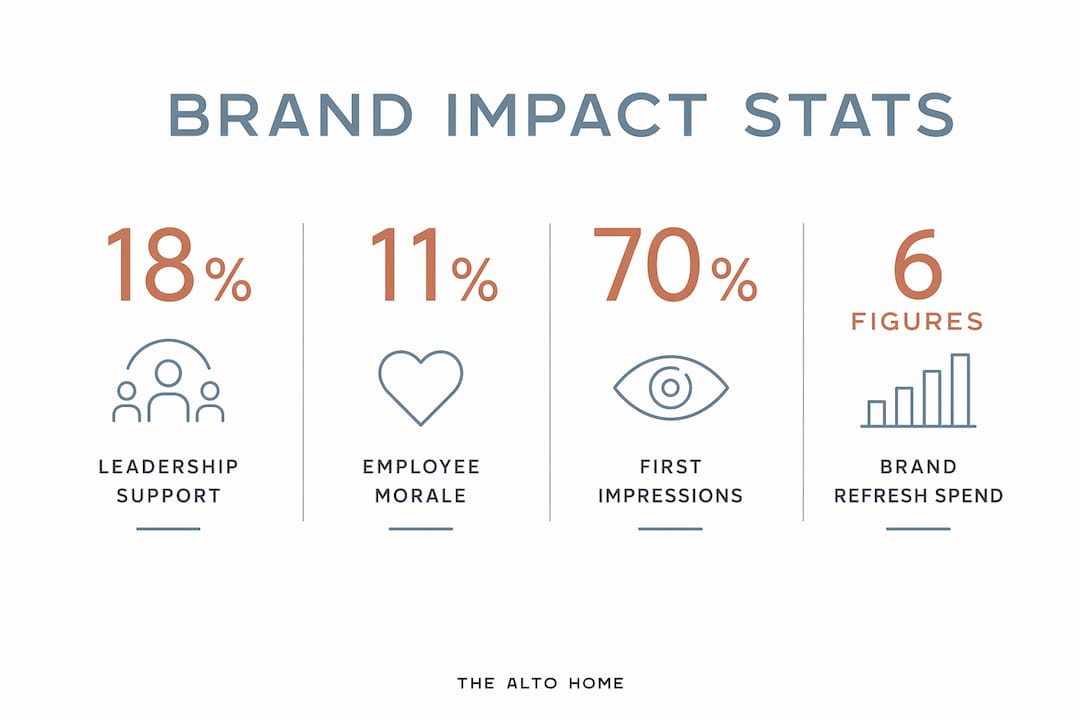
A 2026 Current Psychology study found that organizational aesthetics mediate 11–18% of the effect between leadership support and employee wellbeing. That is a measurable pathway. Better furniture is not just a perk. It is a mechanism through which leadership values become felt experience for your team.
Privacy features in furniture design carry particular weight. A 2026 randomized crossover experiment found that combined privacy measures, including partitions and window views, reduced psychological stress and improved work performance by up to 25%. Open plan offices without adequate partitioning force employees to work in a state of low-grade stress. That stress erodes concentration, reduces output, and damages the internal brand story your team tells about you.
Nature-inspired design elements in office furniture also produce measurable results. A 2026 Springer Nature study found significant links between nature-inspired design and improved managerial performance and decision-making. Wood surfaces, plant integration, and organic shapes are not decorative choices. They are performance inputs.
The four ways furniture shapes employee wellbeing and internal brand reputation:
- Privacy and partitioning reduce stress and protect concentration, signaling that the company respects employee focus.
- Ergonomic seating and adjustable desks reduce physical discomfort, signaling that the company invests in employee health.
- Nature-inspired materials like wood and stone surfaces support cognitive performance and reduce mental fatigue.
- Acoustic management through upholstered panels and soft furnishings reduces noise distraction, a leading driver of workplace dissatisfaction.
Pro Tip: Survey employees quarterly on furniture comfort and privacy. The answers will tell you more about your internal brand health than most engagement surveys.
How do you align furniture choices with your brand values?
The most common branding mistake in office design is the value mismatch. A post-occupancy evaluation study published in Frontiers in 2026 found that dissatisfaction with furniture adequacy in open-plan offices directly impacted employee concentration and autonomy. The same principle applies to visitor experience. When the lobby looks polished and the work areas look neglected, the brand credibility built at the front door collapses the moment a client sees the rest of the space.
Furniture also communicates hierarchy through spatial layout and sight lines, not just design style. The arrangement of desks, the height of partitions, and the placement of seating all tell a story about how your organization values different roles and relationships. A 2026 privacy design study confirmed that spatial layout and partitioning create brand impressions that go well beyond surface aesthetics.
Sensory comfort compounds the effect. A 2026 Scientific Reports study linked sensory indoor environmental quality including ergonomics, acoustics, and lighting to employee satisfaction and wellbeing through a total environmental comfort metric. Furniture that looks good but feels uncomfortable, sits under harsh lighting, or sits in a noisy room still delivers a poor brand experience.
The table below maps common furniture styles to the brand personality traits they communicate:
| Furniture style | Brand personality communicated |
|---|---|
| Mid-century modern wood | Creative, warm, approachable, design-conscious |
| Minimalist white and metal | Efficient, tech-forward, precise |
| Heavy dark wood and leather | Established, authoritative, traditional |
| Mixed materials with plants | Progressive, people-first, health-conscious |
| Mismatched or worn pieces | Disorganized, cost-cutting, low attention to detail |
Aligning your furniture with your brand personality requires auditing every zone of the office, not just the reception area. The break room, the meeting rooms, and the individual workstations all contribute to the overall brand signal.
Key factors to audit across every zone:
- Does the furniture condition match the quality level your brand promises?
- Do the materials and colors align with your brand palette and personality?
- Does the layout support the collaboration or focus work your culture requires?
- Are ergonomics and privacy features present where employees spend the most time?
What are the practical steps to use furniture as a branding tool?
Treating office furniture as a branding tool requires the same coordination you apply to any brand touchpoint. Marketing and facilities teams rarely collaborate on furniture decisions. That gap produces the value mismatches described above.
Start with a full furniture audit mapped against your brand values. Walk every space and ask whether the furniture in that room would make a client trust your brand more or less. Document gaps between the brand promise and the physical reality. Then prioritize changes by visitor and employee impact, starting with the spaces that receive the most traffic.
When selecting new pieces, apply evidence-based criteria alongside aesthetic ones. Prioritize ergonomic seating with adjustable height features, privacy partitions in open-plan areas, and nature-inspired materials like solid wood surfaces. These choices serve both the visual brand signal and the employee performance outcomes that ultimately define your brand’s reputation. Explore modern home office furniture options that combine design integrity with functional performance.
Measure the impact beyond appearance. Track employee satisfaction scores before and after furniture upgrades. Note changes in client feedback and candidate impressions during hiring. The office environment branding effect is real and measurable when you set the right metrics from the start.
Key Takeaways
Office furniture shapes brand image through physiological priming, employee wellbeing, and spatial signals that operate well below conscious awareness.
| Point | Details |
|---|---|
| First impressions form fast | Visitors judge brand environments within seconds based on furniture, lighting, and cleanliness. |
| Priming effects are physical | Poor furniture in one space alters perception of subsequent spaces through measurable physiological responses. |
| Privacy features protect performance | Combined privacy measures reduce psychological stress and improve work performance by up to 25%. |
| Value mismatches damage credibility | Polished lobbies paired with neglected work areas create cognitive dissonance that erodes brand trust. |
| Furniture metrics go beyond looks | Track ergonomics, acoustics, and employee satisfaction alongside visual appeal to measure true brand impact. |
The silent brand signal most businesses ignore
Most brand audits cover logo, color, copy, and digital presence. Almost none of them cover the chair a job candidate sits in during an interview or the desk surface a client sees during a site visit. That gap is where brand credibility quietly leaks.
I have seen companies spend six figures on a brand refresh and leave the same worn task chairs in the conference room. The disconnect is jarring. A candidate who sits in an uncomfortable chair during an interview is already forming a story about how much this company values its people. That story influences whether they accept the offer.
The furniture-as-brand-signal problem is also a hiring problem. The impact of office design on candidate perception is real. Top candidates have options. They read the physical environment as evidence of company culture. A well-furnished, thoughtfully designed workspace tells them the company pays attention to detail and invests in its people.
The deeper mistake is treating furniture as a one-time decision. Brand environments need the same ongoing evaluation as any other brand asset. Collect user feedback. Track satisfaction scores. Replace pieces that no longer reflect where the brand is going. Furniture that served a startup identity may actively undermine a scale-up brand. The office environment is not a set-it-and-forget-it investment. It is a living brand statement that requires the same attention you give your website or your marketing campaigns.
— Kevin O’Gara
The Alto Home’s approach to brand-aligned workspaces
The Alto Home builds standing desks that treat design and function as equal priorities, not trade-offs. If your office furniture audit reveals a gap between your brand promise and your physical workspace, The Alto Home’s signature series offers a direct solution.
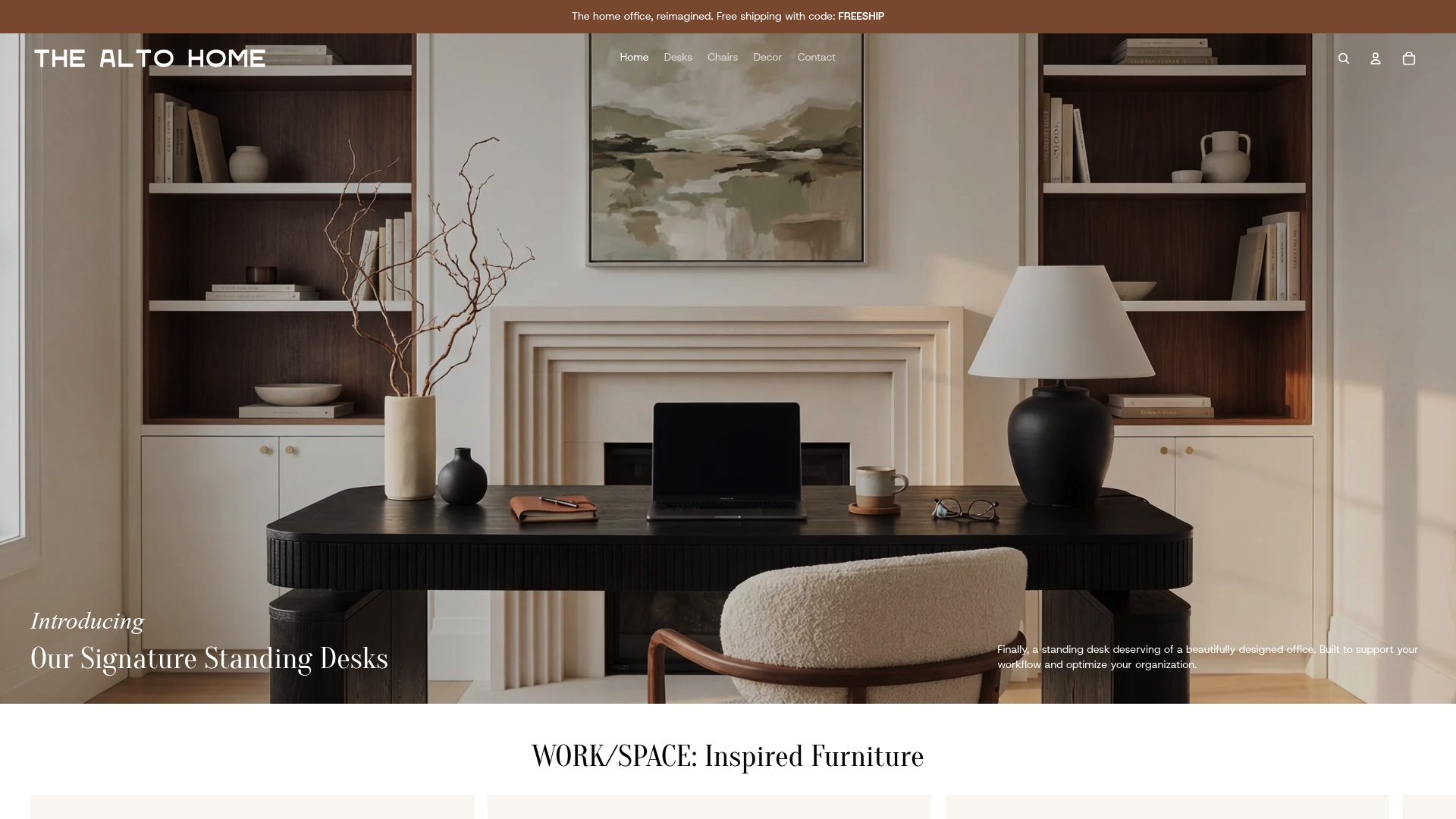
The Gramercy Fluted Wood Standing Desk and the Tribeca Mid-Century Wood Standing Desk combine solid wood construction with adjustable height mechanics, delivering the nature-inspired materials and ergonomic performance that research links to better employee wellbeing and stronger brand perception. The Bowery Mid-Century Wood Lift Top Desk adds flexible storage for workspaces where organization is part of the brand story. Each piece is designed to signal design-consciousness and care for the people who use it, exactly the brand values most business owners want their workspace to communicate.
FAQ
Why does office furniture affect brand image?
Office furniture creates immediate physiological and psychological responses in visitors and employees. Research shows people form brand judgments within seconds based on physical environment cues including furniture style, condition, and layout.
How does office furniture impact hiring?
Candidates read office furniture as evidence of company culture and investment in people. A well-designed, comfortable workspace signals that the company values its employees, which directly influences whether top candidates accept offers.
What furniture features most improve brand perception?
Privacy partitions, ergonomic seating, adjustable desks, and nature-inspired materials like solid wood surfaces produce the strongest combined effect on both visitor perception and employee wellbeing.
How do you measure the brand impact of office furniture?
Track employee satisfaction scores, candidate feedback during hiring, and client impressions before and after furniture upgrades. Sensory comfort metrics covering ergonomics, acoustics, and lighting provide the most complete picture.
What is the biggest furniture branding mistake businesses make?
The most common mistake is the value mismatch: investing in a polished reception area while leaving work areas with worn or inadequate furniture. That inconsistency creates cognitive dissonance that damages brand credibility with both visitors and employees.
