

A mid-century modern desk is defined as a functional work surface built on clean lines, tapered legs, and natural wood construction, designed to balance visual simplicity with practical use. The term “mid-century modern” refers to the design movement that flourished roughly from the 1940s through the 1960s, and its furniture vocabulary remains one of the most recognized in American interior design. The guiding principle is form follows function: every visual choice must solve a practical problem first. Woods like walnut and teak, minimal hardware, and elevated bases are not decorative accidents. They are deliberate decisions that give these desks their lasting appeal. The Alto Home’s Gramercy and Tribeca desks reflect exactly this philosophy, pairing classic wood craftsmanship with modern ergonomic adjustability.
What design features distinguish a mid-century modern desk?
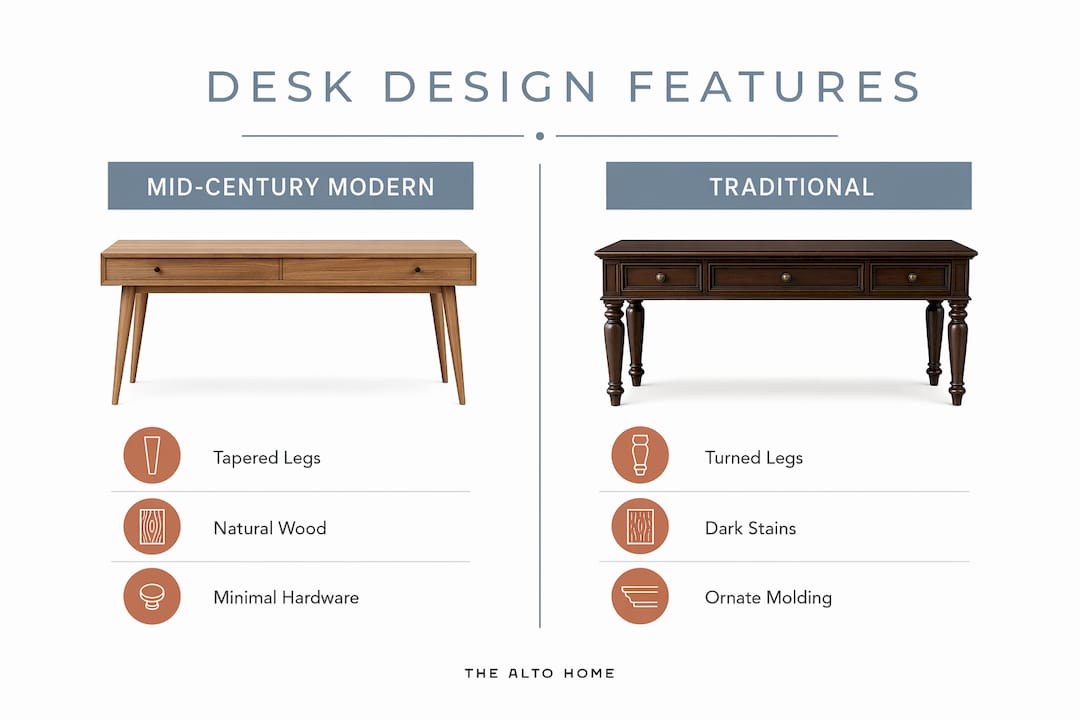
Tapered legs are the single most recognizable feature of a mid-century modern desk. They keep the piece visually light, preventing the heavy, grounded look of panel-base or trestle-style desks. Remove the tapered legs and you lose the style entirely.
Beyond the legs, the silhouette stays clean and rectangular, or occasionally organic in shape. Hardware is minimal: small brass pulls, recessed handles, or no hardware at all. Ornamentation is absent by design. The surface does the talking.
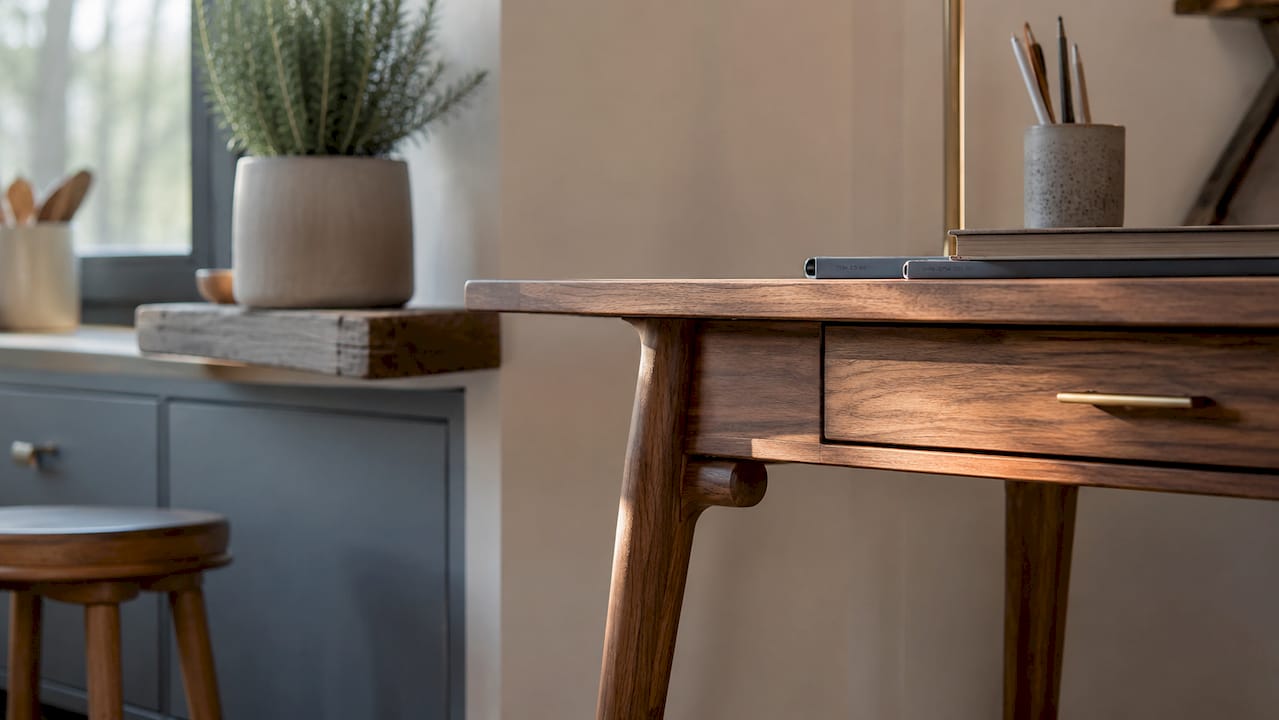
Mid-century modern desks appear in several distinct forms. Executive desks offer wide, flat surfaces with integrated storage drawers. Secretary and drop-front desks fold closed to hide the workspace entirely, which makes them ideal for living rooms or guest rooms. Wall-mounted floating desks strip the form down to its most minimal expression.
Traditional desks, by contrast, rely on heavy turned legs, carved molding, and dark stained wood to signal formality. Mid-century proportions do the opposite: they read as light, horizontal, and approachable. The table below captures the core differences.
| Feature | Mid-century modern | Traditional |
|---|---|---|
| Leg style | Tapered, angled | Turned, carved |
| Surface shape | Flat, minimal | Ornate, paneled |
| Hardware | Minimal or absent | Decorative brass or iron |
| Wood finish | Natural grain, matte or satin | Dark stain, high gloss |
| Visual weight | Light, elevated | Heavy, grounded |
What materials and finishes define mid-century desk aesthetics?
Walnut and teak are the two canonical woods of mid-century modern design. Walnut carries a darker, richer tone and represents the American tradition. Teak runs warmer with a more open grain and is closely associated with Scandinavian variants of the style. Both woods age beautifully, developing patina over years of use. Understanding Scandinavian desk design helps clarify how teak-forward aesthetics differ from their American walnut counterparts.
Solid wood is the preferred choice for authenticity and longevity. Veneer finishes require diligent maintenance to avoid chipping, bubbling, or moisture damage. A solid walnut desk will outlast a veneered version by decades with basic care. That difference matters when you are buying a piece intended to anchor a room for years.
Common finishes include:
- Natural oil or wax: Preserves the raw grain, deepest color, and tactile warmth of the wood. Requires periodic reapplication but is easy to spot-repair.
- Satin lacquer: Adds a thin protective layer without high gloss. The most practical choice for daily desk use.
- Matte polyurethane: Durable and low-maintenance, though it slightly mutes the wood’s natural depth.
- Tung oil: Traditional finish that soaks into the grain rather than sitting on top. Gives the most authentic vintage appearance.
Wood tone shapes the mood of an entire room. Dark walnut reads as warm and grounded, making it ideal for rooms with white or gray walls. Lighter teak or ash tones work well in rooms with warm neutrals or terracotta accents. Choosing the right finish is as much about the room as the desk. The Alto Home’s guide to wood desk finishes breaks down each option with practical maintenance advice.
How do you choose the right size and ergonomic features?
A functional mid-century modern desk should measure at least 48 inches wide by 24 inches deep to accommodate typical work needs. That minimum gives you enough surface for a laptop, a monitor, and basic desk accessories without crowding. For smaller rooms, a compact desk around 36 inches wide maintains the style without overwhelming the space.
Vintage mid-century desks present a specific challenge. Many original pieces measure only 22–24 inches deep, which is shallower than modern standards. That depth works for a single laptop but creates real problems for dual-monitor arrangements. A monitor arm can partially solve this by moving screens off the surface, but it does not fully compensate for limited depth.
Ergonomics require that desk height allows your elbows to rest at roughly 90 degrees while typing. Most fixed-height desks sit between 28 and 30 inches, which suits average-height adults. Taller or shorter decorators and remote workers will find that a fixed vintage desk forces compromises in posture. Adjustable-height desks solve this directly, which is why The Alto Home built electric height adjustment into its Tribeca and Gramercy models without changing the visual language of the style.
Pro Tip: Before purchasing a vintage or reproduction mid-century desk, measure your monitor setup and add at least 12 inches of clearance behind the screen. A desk that looks perfect in a showroom can feel cramped once your technology is in place.
Storage is a secondary but real consideration. Mid-century executive desks typically include one or two shallow drawers for papers and small items. They rarely offer deep filing drawers, which reflects the era’s lighter approach to office storage. If you need significant storage, a credenza placed behind the desk is the period-correct solution.
How to style a mid-century modern desk in a contemporary space
The most common styling mistake is going all-in on one era. Mixing one or two mid-century hero pieces with modern furniture keeps the room feeling lived-in rather than like a museum exhibit. A walnut desk paired with a contemporary task lamp and a simple linen chair reads as confident and current. A room filled exclusively with period pieces reads as a set.
Warm wood tones need breathing room. Pair a dark walnut desk with white or light gray walls to let the grain stand out. Saturated accent colors like forest green, burnt orange, or navy work well as secondary tones in cushions, rugs, or art. Avoid competing wood tones on adjacent furniture. One dominant wood species per room is the cleaner choice.
Practical styling tips for mid-century modern workspaces:
- Lighting: A ceramic or brass arc floor lamp or a cone-shade desk lamp reinforces the period aesthetic without requiring vintage sourcing.
- Seating: A chair with tapered legs and upholstered seat, or one with wicker caning details, ties directly to mid-century material vocabulary.
- Textiles: A low-pile wool rug in a geometric pattern grounds the desk area and adds warmth without visual noise.
- Wall treatment: Open shelving in walnut or a floating shelf above the desk extends the wood tone vertically and adds storage without bulk.
Secretary desks are the best choice for multipurpose rooms. They fold closed when not in use, hiding cables, papers, and screens behind a clean wood face. A guest room or living room with a secretary desk reads as a living space first and a workspace second. The Alto Home’s Bowery lift-top desk applies the same logic to a modern format, concealing the work surface inside a clean wood cabinet.
Pro Tip: Treat the desk as the room’s focal point and build outward from it. Choose one strong piece, then select supporting furniture and accessories that complement rather than compete. A guide on desk as focal point can help you anchor the layout with confidence.
For rooms that serve dual purposes, designing a home office for dual-purpose rooms requires thinking about concealment, scale, and how the desk reads when you are not working at it.
Key takeaways
A mid-century modern desk is defined by tapered legs, natural wood construction, and a form-follows-function philosophy that makes it as practical as it is visually distinctive.
| Point | Details |
|---|---|
| Core design identity | Tapered legs, clean lines, and minimal hardware define the style at a glance. |
| Best materials | Solid walnut or teak outlasts veneer and develops richer patina over time. |
| Minimum working size | A desk at least 48 inches wide by 24 inches deep handles most work setups comfortably. |
| Ergonomic priority | Desk height should allow 90-degree elbow posture; adjustable-height models solve vintage sizing limits. |
| Styling rule | Mix one or two mid-century hero pieces with modern furniture to keep the space current and livable. |
Why mid-century modern desks have never really gone out of style
I have spent years watching design trends cycle in and out of favor. Farmhouse gave way to Japandi. Maximalism returned after a decade of all-white interiors. Mid-century modern, though, never actually left. That tells you something.
The reason is structural, not sentimental. The form-follows-function principle produces furniture that works well regardless of what surrounds it. A walnut desk with tapered legs does not fight with a contemporary task chair or a modern pendant light. It holds its own because its proportions are correct, not because it is trying to match a trend.
What I find most underappreciated is the emotional quality of solid wood in a workspace. There is a tactile warmth to a walnut surface that no laminate or painted MDF replicates. Working at a well-made wooden desk changes how the space feels, and that matters more than most decorators admit.
My honest advice: do not buy a vintage piece without measuring your actual technology setup first. Many original desks are too shallow for modern monitors, and forcing the fit creates ergonomic problems that undermine the whole point. Quality reproductions that honor the aesthetic while adding adjustable height, like The Alto Home’s Tribeca and Gramercy, are the more practical choice for most people working from home today. Style and function are not in conflict here. The best mid-century modern desks prove they never were.
— Kevin O’Gara
Mid-century modern desks from The Alto Home
The Alto Home builds desks that take mid-century design seriously without freezing it in 1962. The Greenwich rotating wood standing desk combines classic wood craftsmanship with a rotating surface that adapts to how you actually work. The Gramercy fluted wood standing desk adds period-correct fluting detail to a fully electric adjustable frame. The Tribeca mid-century standing desk is the most direct expression of the style, with solid wood construction and clean proportions that work in any room.
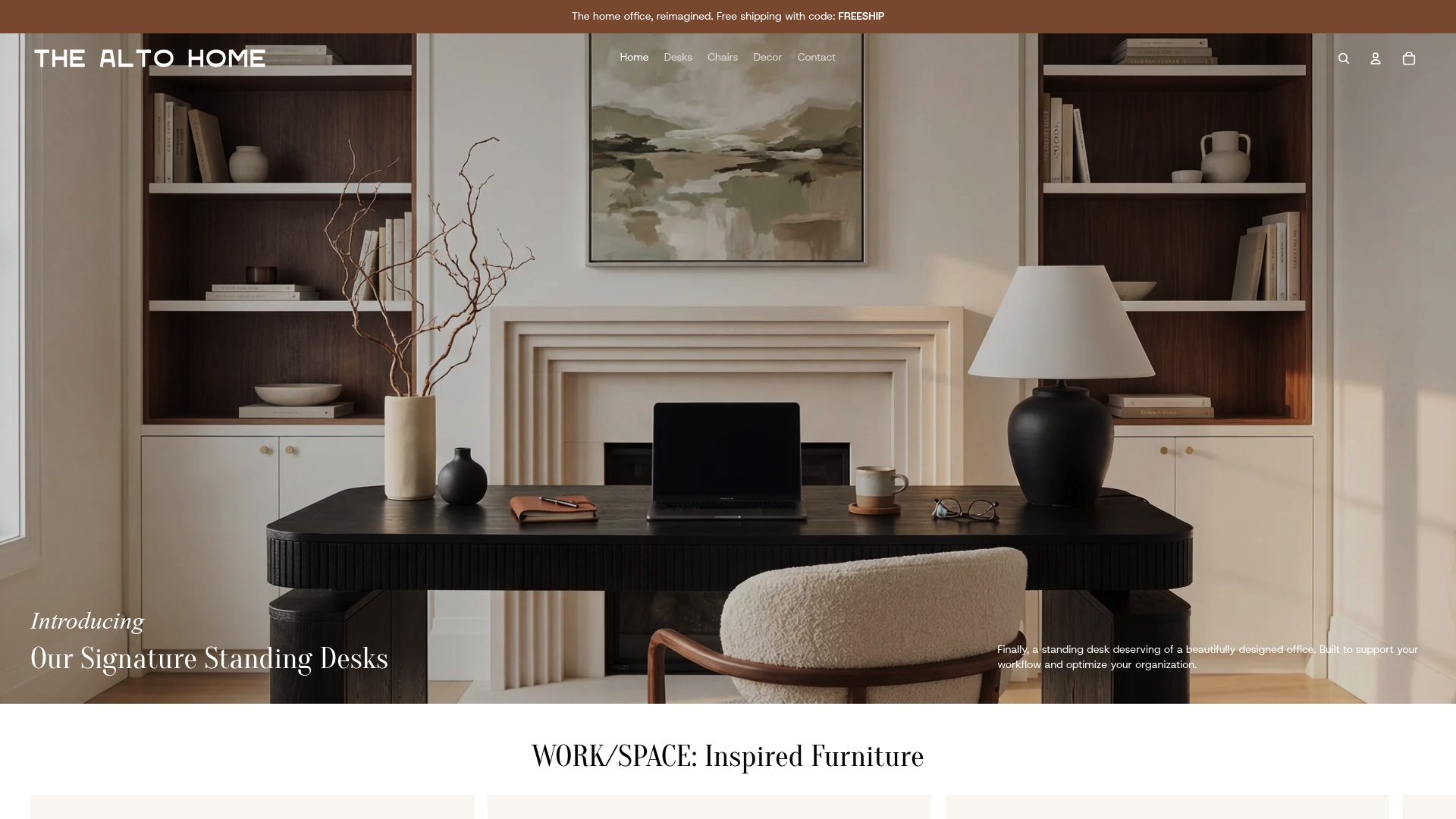
Each desk pairs naturally with The Alto Home’s modern office chairs, including the Felix upholstered chair with wicker caning, which speaks the same material language as the desks. The full collection is available at The Alto Home.
FAQ
What defines a mid-century modern desk?
A mid-century modern desk is defined by tapered legs, clean horizontal lines, minimal hardware, and natural wood construction in walnut or teak. The form-follows-function design philosophy means every visual element also serves a practical purpose.
What wood is used in mid-century modern desks?
Walnut is the primary American mid-century wood, offering a dark, rich tone. Teak is the Scandinavian variant, warmer with an open grain. Solid wood is preferred over veneer for durability and authentic appearance.
What size should a mid-century modern desk be?
A functional mid-century modern desk should measure at least 48 inches wide by 24 inches deep for standard work needs. Compact spaces can use a desk around 36 inches wide while maintaining the style.
Are vintage mid-century desks practical for modern workspaces?
Many vintage mid-century desks measure only 22–24 inches deep, which limits space for modern monitor setups. Adjustable-height reproductions that honor the aesthetic while meeting current ergonomic standards are often the more practical choice.
How do you style a mid-century modern desk in a contemporary room?
Place one or two mid-century pieces as focal points and pair them with modern furniture to avoid a period-room effect. Warm wood tones work best against neutral or lightly saturated wall colors, with period-appropriate lighting and minimal accessories.
