

Statement furniture pieces for offices are visually distinctive items designed to anchor a workspace’s identity while serving real functional needs. They are not decoration for decoration’s sake. The best pieces carry ergonomic value, reflect personal or brand character, and hold up under daily professional use. The industry term for this category is focal point furniture, and it spans everything from electric sit-stand desks to sculptural lounge seating. Whether you work from a home studio or a hybrid corporate floor, the right focal point furniture signals who you are before you say a word.
1. What are the best statement furniture pieces for offices?
The six categories below represent the strongest options for professionals who want their workspace to look intentional and perform at a high level. Each one earns its place through a combination of visual impact and practical function.
Electric sit-stand desks
Electric sit-stand desks are the gold standard for modern offices. Sit-stand desks in the $700–$1,200 range have become the preferred choice for hybrid offices, accommodating different users without reconfiguration. That price range reflects a desk that moves smoothly, holds position reliably, and looks polished enough to anchor a room. The Alto Home’s Gramercy Fluted Wood Standing Desk is a strong example: fluted wood panels give it a sculptural quality that most desks in this category lack entirely.
Large-format executive desks
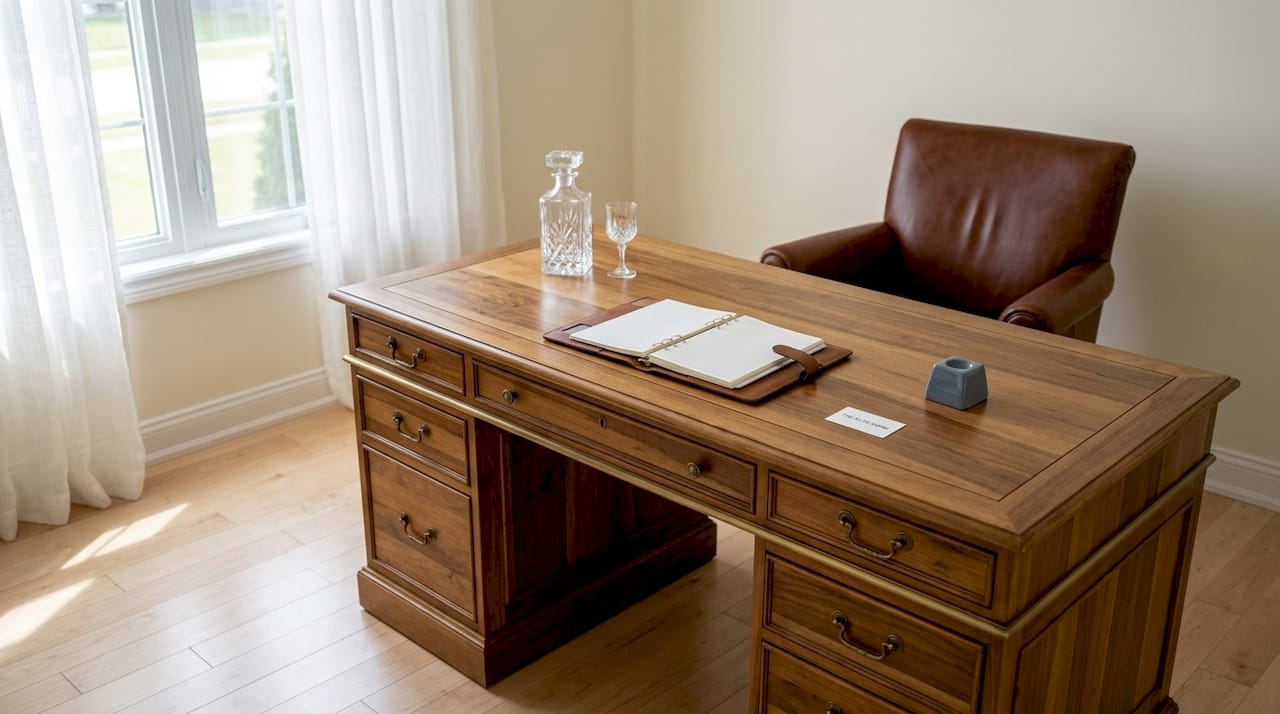
A wide executive desk commands attention the moment someone walks into a room. Premium executive desks often carry 10-year manufacturer guarantees and feature finishes like American walnut, with widths ranging from 2.15m to 2.40m. That warranty signals the kind of material quality that holds its appearance over years of use. Integrated storage returns keep the surface clean, which is what separates a true statement piece from a cluttered workhorse.
Sculptural and organic-form desks
Sculptural, organic forms in office furniture bridge functional performance with human-centric design, inspired by nature and favored in current design trends. Fluid edges and asymmetric silhouettes create a calming visual effect that rigid rectangular desks simply cannot. These pieces often require custom fabrication. True sculptural pieces can involve robotic 3D printing and months-long lead times, so plan well ahead if this is the direction you want to take.
Pro Tip: If you want a sculptural desk without the custom lead time, look for production pieces with curved or fluted surfaces. They deliver much of the visual impact at a fraction of the wait.
Modular benching systems
Modular benching systems let you reconfigure a floor plan without buying new furniture. Companies transitioning to hybrid offices convert 20–40% of individual cubicle footprint into collaborative zones, and modular benching is the furniture category that makes that conversion possible. Panels, screens, and power modules attach and detach cleanly. The result is a workspace that looks deliberate rather than improvised. You can read more about modular furniture benefits before committing to a system.
Mobile and adjustable lounge seating
Lounge seating on casters creates social zones that can shift position based on the day’s needs. This category works especially well in hybrid offices where the same space needs to support focused solo work in the morning and team collaboration in the afternoon. Choose pieces with clean upholstery and a low profile so they read as intentional design choices rather than afterthoughts. Bold color or textured fabric is where lounge seating earns its status as a statement piece.
Technology-ready furniture with integrated cable management
Integrated cable management is critical in maintaining the statement look of any high-end office piece. Built-in cable channels prevent the visual clutter that degrades an otherwise beautiful setup. Technology-ready furniture includes desks and tables with flush-mounted power access, USB ports, and wire routing built into the frame. The surface stays clean. The design intent stays intact.
2. How materials, finishes, and craftsmanship define the impact
The material a piece is made from determines both how long it lasts and how much visual weight it carries in a room. American walnut, for example, has a grain depth that photographs well and ages gracefully under office lighting. Marble surfaces on conference tables create immediate authority. Wood finishes like matte lacquer, oiled hardwood, and wire-brushed oak each communicate a different aesthetic register.
Craftsmanship details separate furniture that looks good in a showroom from furniture that holds up in daily use. The details that matter most include:
- Soft-close drawer mechanisms that signal quality without requiring the user to think about it
- Lockable storage for shared office environments where personal items need security
- Chrome or brushed brass accents that tie a piece to a broader interior palette
- Dovetail joinery on solid wood pieces that indicates structural integrity, not just surface finish
- Edge banding and veneer quality that prevent peeling at corners after years of use
These details reinforce brand identity in a corporate setting and personal taste in a home office. A desk with poor edge finishing reads as cheap regardless of the wood species used on the surface. Craftsmanship is where the investment in a statement piece either pays off or falls apart.
3. Design considerations for hybrid and remote work environments
Hybrid offices require furniture that works for multiple people across multiple configurations. Hybrid office furniture requires flexibility, modularity, sit-stand adjustability, and integrated technology to maintain both functionality and aesthetics. Generic efficiency trends like hot-desking fail without considering user needs and the equipment each person brings to the desk. A beautiful desk that frustrates half your team is not a statement piece. It is an obstacle.
When you plan office furniture for productivity in a hybrid setting, work through these four priorities in order:
- Height adjustability first. Every shared desk needs electric height adjustment. Universal adjustability features like electric sit-stand mechanisms are essential to avoid underuse and employee frustration. A fixed-height desk in a shared environment will always fit someone poorly.
- Personal storage second. Hybrid workers need a place to secure their belongings. Personal lockers budgeted at $200–$500 each are the standard solution. They keep the desk surface clear and give workers a sense of ownership in a shared space.
- Acoustic zoning third. Visual statement pieces work best when the room also manages sound. Acoustic panels, upholstered screens, and soft lounge furniture absorb noise and define zones without hard walls.
- Technology access fourth. Every workstation needs power and data access within arm’s reach. Furniture with built-in power modules removes the need for visible extension cords.
Pro Tip: Before finalizing any desk for a hybrid office, test the height adjustment mechanism yourself. A motor that is slow or noisy will discourage workers from using the sit-stand function at all, which defeats the purpose of the investment.
4. Balancing aesthetics and functionality when selecting statement pieces
A statement piece that looks striking but creates daily friction is a design failure. The goal is furniture that functions so well that workers forget it is there, while visitors notice it immediately. Ergonomic chairs with intuitive adjustments and durability are crucial in hybrid offices to promote comfort and reduce daily friction. The same principle applies to every piece in the room.
The table below shows how to evaluate any candidate piece before purchasing:
| Evaluation criterion | What to look for | Red flag |
|---|---|---|
| Ergonomic support | Adjustable height, lumbar support, seat depth | Fixed dimensions with no adjustment |
| Cable management | Built-in channels, flush power access | Exposed grommets with no routing |
| Surface durability | Scratch-resistant finish, edge protection | Thin veneer on high-traffic surfaces |
| Storage integration | Hidden drawers, lockable compartments | Open shelving only |
| Visual coherence | Finish and form that match the room | Piece that competes with everything else |
Avoid purely decorative pieces that lack ergonomic support. A sculptural chair that cannot be adjusted for lumbar support will cause discomfort within weeks. The desk as a room focal point works best when it earns that status through both form and function. Clean lines and hidden storage reduce visual clutter, which makes the statement piece itself read more clearly in the space.
Key takeaways
Statement furniture pieces for offices deliver the most value when they combine visual distinctiveness with ergonomic function, material quality, and adaptability for hybrid use.
| Point | Details |
|---|---|
| Prioritize sit-stand adjustability | Electric height adjustment is non-negotiable for shared desks in hybrid offices. |
| Material quality determines longevity | American walnut, solid joinery, and quality finishes outlast surface-level aesthetics. |
| Cable management protects the look | Built-in cable channels preserve visual impact and prevent clutter from undermining design intent. |
| Hybrid offices need modular flexibility | Convert 20–40% of fixed workstations into reconfigurable zones to support changing team needs. |
| Function must match form | A statement piece that creates daily friction fails regardless of how good it looks. |
Why I think most offices get statement furniture wrong
Most offices treat statement furniture as a budget line item rather than a design decision. They buy one dramatic piece, place it in a corner, and surround it with generic furniture that fights it visually. The result is a room that looks confused rather than curated.
What I have observed over years of watching office design trends is that the shift toward organic and sculptural forms is real and accelerating. Office furniture embracing organic architecture trends creates calming environments that also perform well functionally. That is not a coincidence. Fluid shapes reduce visual tension in a room, which makes it easier to focus. The design serves the worker, not just the Instagram photo.
The mistake I see most often in hybrid setups is prioritizing look over user experience. A stunning desk that takes 30 seconds to adjust will be left at one height permanently. Workers will not use a feature that feels like a chore, no matter how well the piece photographs. Test every adjustment mechanism before you commit. Sit in every chair for at least 20 minutes. Pull every drawer. The tactile experience of a piece tells you more than any product page.
My honest recommendation is to start with one genuinely great desk and build the room around it. Furniture selection must align with specific team work models. Get that right first, then add seating, storage, and lighting that support the desk rather than compete with it. One well-chosen piece beats five mediocre ones every time.
— Kevin O’Gara
The Alto Home’s approach to bold, functional office design
The Alto Home builds standing desks that function as genuine focal point furniture, not just ergonomic tools. Each piece in the collection combines premium wood craftsmanship with electric height adjustment, so you never have to choose between a desk that looks right and one that works right.
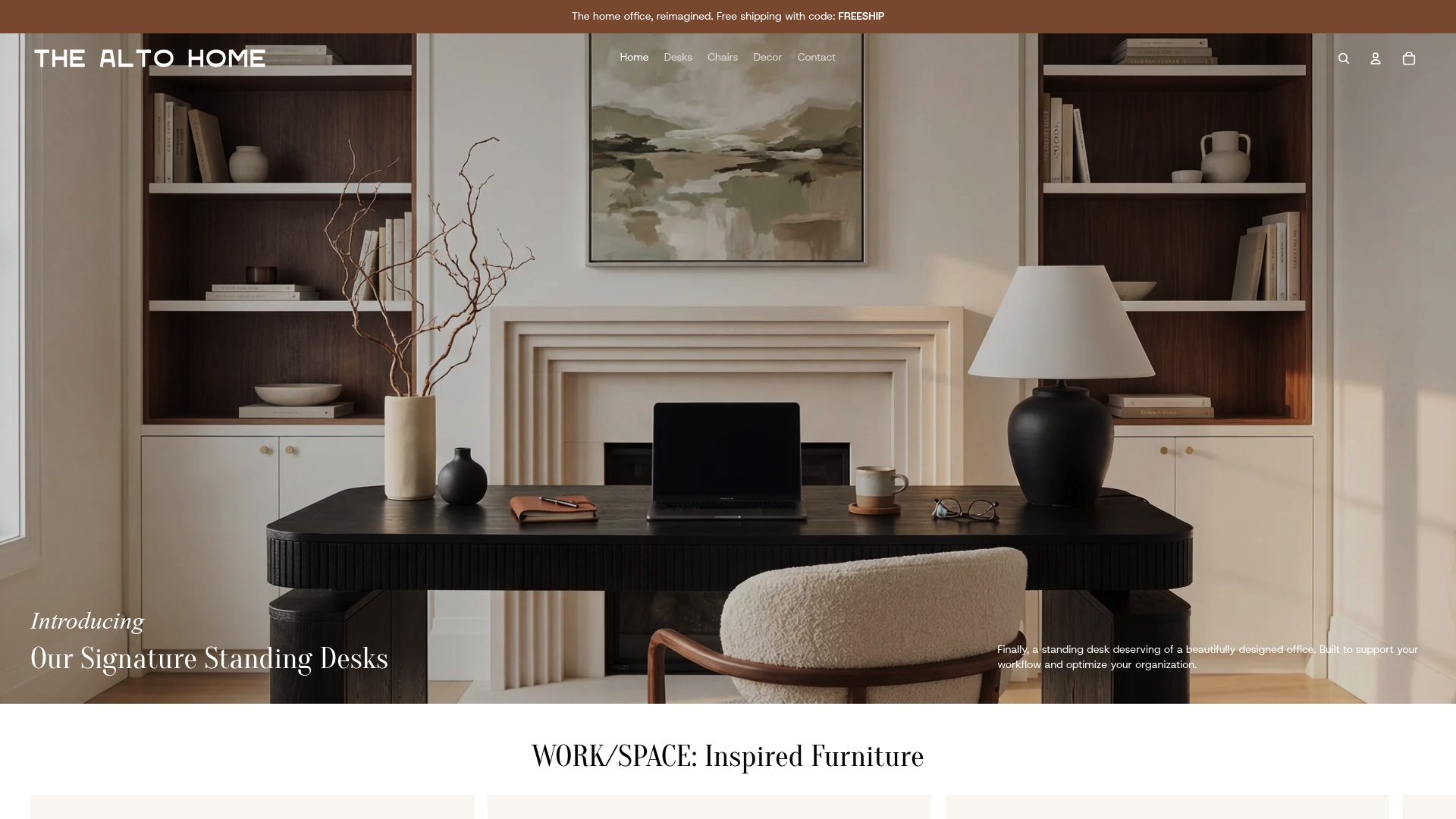
The Greenwich Rotating Wood Standing Desk features a rotating surface that adds a sculptural dimension no standard desk offers. The Gramercy Fluted Wood Standing Desk brings architectural detail to the home office through its distinctive fluted panels. Both desks are built from high-quality wood with finishes that hold up over years of daily use. If you are ready to make your desk the defining piece in your workspace, The Alto Home’s full collection of adjustable standing desks is the right place to start.
FAQ
What makes a piece of office furniture a “statement” piece?
A statement piece is any item that serves as the visual focal point of a room while also performing a clear functional role. It stands out through material quality, form, or scale rather than decoration alone.
How much should I budget for a quality statement desk?
Electric sit-stand desks in the $700–$1,200 range represent the industry standard for quality and adjustability in professional settings. Premium executive desks with solid wood finishes and 10-year warranties typically cost more.
Are sculptural office desks practical for daily use?
Yes, provided they include ergonomic features like height adjustment and cable management. Early-stage sculptural designs use 3D modeling to balance structure and elegance, so well-made pieces are built for function as well as form.
What furniture works best for hybrid office teams?
Hybrid office furniture requires height-adjustable desks, modular layouts, integrated power access, and personal storage like lockers. Flexibility and shared usability matter more than fixed, assigned workstations.
How do I keep a statement desk looking good over time?
Choose a desk with a durable surface finish, built-in cable management, and hidden storage. These features prevent the clutter and surface wear that degrade a piece’s appearance faster than age does.
