

Standing desks are defined as height-adjustable workstations that let you alternate between sitting and standing throughout the workday, and their role in wellness design is now backed by clinical evidence. A 2026 randomized controlled trial found that sit-stand desk interventions reduced sedentary time from 8.00 to 5.22 hours per day over six months. That is a meaningful shift in daily physiology, not a marginal one. The role of standing desks in wellness design extends beyond posture. It reaches into hormonal health, cognitive performance, and the behavioral architecture of your entire workspace. The Alto Home builds desks like the Gramercy and Tribeca series specifically to make that shift feel natural and beautiful.
What is the role of standing desks in wellness design?
Standing desks are the anchor of ergonomic office design because they convert passive sitting time into active postural variation. Wellness design, the practice of building environments that support physical and mental health, treats movement as a default behavior rather than an interruption. Standing desks are the most direct furniture tool for achieving that goal.
The physiological evidence is specific. Hourly posture switching reduces musculoskeletal strain by over 30%. Standing alone is not sufficient. The benefit comes from the transition between positions, which prevents any single muscle group from sustaining constant contraction. Static environments force that contraction, and fatigue follows.

The hormonal impact is equally concrete. A three-month clinical evaluation found that aldosterone levels dropped by 1.5 ng/dL (p=0.0370) in participants using sit-stand desks. Aldosterone regulates blood pressure and fluid balance. Lower levels suggest a measurable cardiovascular benefit from reducing sedentary behavior at the desk.
Wellness design also addresses cognitive output. Research on context-aware desk use shows that people stand when they want to focus, not at task breakpoints. That finding reframes the standing desk from a health tool into a productivity tool. The two functions are not separate.
What scientifically proven health benefits do standing desks offer?
The health benefits of standing desks fall into three categories: musculoskeletal, metabolic, and cognitive. Each category has specific, measurable outcomes that justify the investment in height-adjustable furniture.
Musculoskeletal and metabolic outcomes
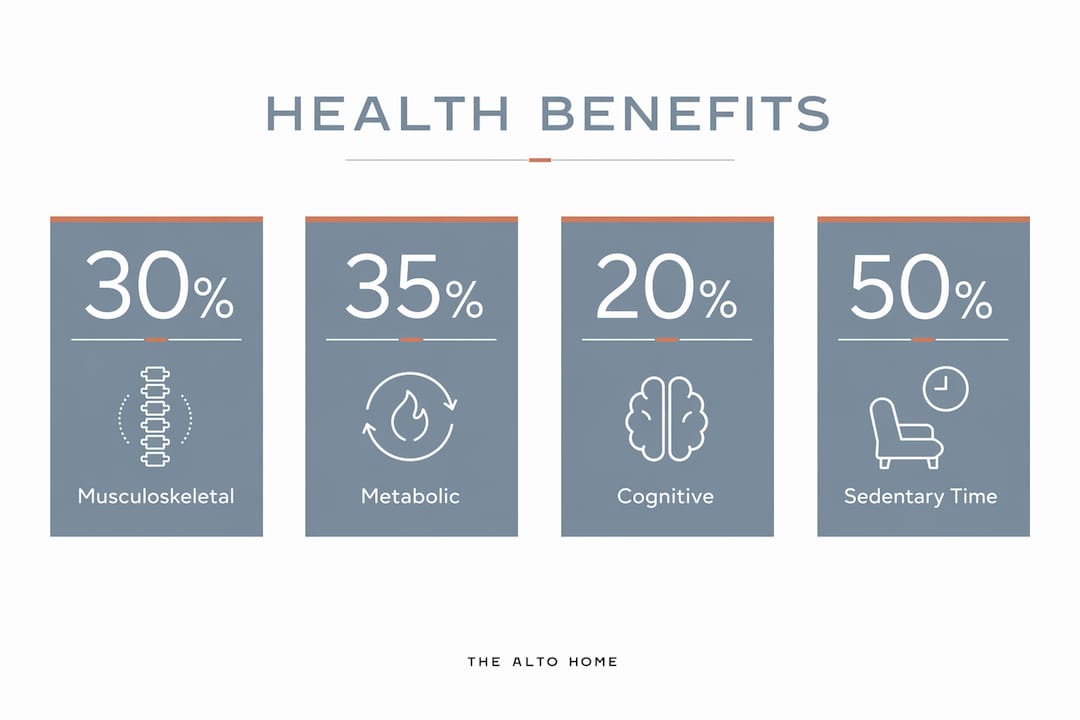
Sedentary time is the primary risk factor that standing desks address. The drop from 8.00 to 5.22 hours of daily sedentary time represents roughly 2.8 hours of additional movement-ready posture per day. Across a five-day workweek, that adds up to 14 hours of reduced sedentary exposure monthly. The musculoskeletal benefit compounds over that same timeline. Neck, shoulder, and lower back strain all decrease when workers switch postures regularly rather than sitting through full eight-hour blocks.
Cognitive and mood improvements
Standing desk users report improved mood and reduced fatigue during standing periods. The productivity-focus connection is particularly striking. Workers choose to stand during cognitively demanding tasks, which suggests the body self-regulates toward better performance when given the option. That behavioral pattern is a strong argument for making height-adjustable desks available rather than optional.
Pro Tip: Set a recurring reminder every 45–60 minutes to switch positions. The health benefit comes from the transition, not from standing for long stretches.
| Benefit category | Specific outcome |
|---|---|
| Sedentary time reduction | From 8.00 to 5.22 hours/day over 6 months |
| Musculoskeletal strain | Over 30% reduction with hourly posture switching |
| Hormonal health | Aldosterone reduced by 1.5 ng/dL over 3 months |
| Cognitive focus | Users stand during high-focus tasks, not just breaks |
How do standing desks fit into a broader wellness workspace?
Standing desks do not operate in isolation. The role of height-adjustable desks in wellness spaces is most effective when the surrounding environment reinforces movement as the natural default. Wellness design treats the entire room as a system, not a collection of individual furniture pieces.
Biophilic design is the most evidence-backed complement to standing desk use. Daylit offices reduce eye strain by 51% and afternoon drowsiness by 56%, while increasing sleep duration by 46 minutes. Those outcomes directly support the sustained energy needed to use a standing desk consistently throughout the day. A worker who is drowsy by 2:00 PM will not stand at their desk. One who works near natural light is far more likely to.
The behavioral design principle behind wellness-focused workspaces is that movement should require no willpower. Furniture placement, floor plan layout, and even the location of shared tools like printers or coffee stations should create natural reasons to move. A fluid 1:0.7 desk layout, meaning fewer fixed desks than workers, encourages people to shift positions and locations throughout the day.
Wellness design elements that work alongside standing desks include:
- Natural light access: Positioned to reduce glare on screens while maximizing circadian rhythm support
- Indoor plants and natural materials: Biophilic elements that lower cortisol and support mental recovery
- Acoustic comfort: Sound-absorbing panels or rugs that reduce cognitive load from ambient noise
- Anti-fatigue mats: Placed at standing positions to reduce joint pressure during longer standing periods
- Air quality management: Ventilation and air-purifying plants that maintain oxygen levels and alertness
- Ergonomic seating nearby: Chairs with tilt mechanisms that support micro-movement during seated periods
Each element reinforces the others. A standing desk in a poorly lit, noisy room delivers a fraction of its potential benefit. The same desk in a wellness-focused home office with natural light and biophilic elements becomes a genuinely different tool.
What best practices maximize standing desk health benefits?
The primary reason people abandon standing desks is an all-or-nothing mindset. Workers who start by standing for four hours on day one experience foot and leg fatigue, then stop using the desk entirely. The gradual transition approach with a structured sit-stand ratio is the proven alternative.
Follow these steps to build a sustainable standing desk habit:
- Start with a 2:1 sit-to-stand ratio. Sit for two hours, stand for one. This prevents fatigue while building tolerance over the first two weeks.
- Progress to a 1:1 ratio over 30 days. Equal sitting and standing time is the target for most workers. Some will prefer more standing once their body adapts.
- Add an active stool or perching chair. A perching position, where you lean against a high stool rather than fully sit, bridges the gap between sitting and standing. It keeps the core engaged without the full load of standing.
- Align standing periods with focus tasks. Research shows workers stand to increase focus, so schedule standing time around your most cognitively demanding work blocks.
- Set desk height correctly before anything else. Your elbows should rest at 90 degrees when your hands are on the keyboard. Shoulders should be relaxed, not raised. A wrong height setting creates new strain rather than eliminating existing strain.
Pro Tip: When setting your standing desk height, check your wrist position first. Bent wrists during typing cause repetitive strain faster than any other ergonomic error. Adjust the desk until your wrists are flat and neutral.
The ergonomic home office setup matters as much as the desk itself. A correctly positioned monitor, keyboard, and chair work together to prevent the compensatory postures that undermine the benefits of standing.
How do standing desks integrate with ergonomic furniture and workspace environment?
Standing desks work best when paired with well-specified ergonomic seating. The logic is straightforward. You will still sit for a significant portion of the day. If your chair forces a static, unsupported posture, the benefits of standing periods are partially offset by the damage done during seated ones.
Ergonomic chairs with free-float or synchronized tilt mechanisms promote micro-movement during seated work. Micro-movement means the chair responds to your body’s natural shifts, preventing any single muscle group from holding a fixed position for too long. This is the seated equivalent of posture switching at a standing desk. The Alto Home’s Modernist Napa Leather office chair pairs with height-adjustable desks to support exactly this kind of dynamic sitting.
Poorly positioned desks cause spine rounding or shoulder shrugging, both of which accelerate fatigue regardless of whether you are sitting or standing. Desk height and monitor distance are the two most commonly misconfigured variables in home offices. Getting them right eliminates the most common sources of end-of-day pain.
Lighting placement is the third variable most workers overlook. Natural light positioned to the side of the monitor reduces glare while supporting circadian alertness. Natural light exposure boosts alertness by 18% and sleep quality by 25%. Both outcomes feed directly into the energy and consistency needed to maintain a standing desk habit over months rather than weeks.
| Furniture element | Role in wellness workspace |
|---|---|
| Height-adjustable standing desk | Reduces sedentary time and supports posture variation |
| Ergonomic chair with tilt mechanism | Promotes micro-movement during seated periods |
| Anti-fatigue mat | Reduces joint load during extended standing |
| Monitor arm | Maintains correct screen height at both sitting and standing positions |
| Task lighting or natural light access | Supports circadian rhythm, reduces eye strain and drowsiness |
The standing desk ROI becomes clear when you account for all these elements together. A single piece of furniture delivers partial results. A coordinated ergonomic setup delivers measurable, sustained health and productivity gains.
Key Takeaways
Standing desks reduce sedentary time, lower musculoskeletal strain, and support cognitive focus most effectively when paired with ergonomic seating, natural light, and a gradual sit-stand transition plan.
| Point | Details |
|---|---|
| Sedentary time reduction | Sit-stand desks cut daily sedentary time from 8.00 to 5.22 hours over six months. |
| Posture switching is the key | Hourly transitions between sitting and standing reduce musculoskeletal strain by over 30%. |
| Wellness design is a system | Natural light, biophilic elements, and ergonomic seating amplify standing desk benefits. |
| Gradual adoption prevents abandonment | Start with a 2:1 sit-to-stand ratio and progress over 30 days to avoid fatigue-driven dropout. |
| Desk height is non-negotiable | Elbows at 90 degrees and flat wrists eliminate the most common sources of standing desk strain. |
The part of standing desk advice nobody talks about
Most standing desk guidance focuses on the desk. I have spent years watching people buy excellent height-adjustable furniture, use it for three weeks, and then let it sit at one fixed height forever. The desk did not fail them. The environment did.
What I have found is that behavioral design matters more than the furniture spec. If standing requires a deliberate decision every time, most people will not do it. The workspaces where standing desks actually get used are the ones where the surrounding environment makes movement feel natural. That means the right lighting, a floor plan that rewards walking, and seating that supports micro-movement rather than locking you in place.
The other thing I would push back on is the idea that standing desks are primarily a health purchase. The research on context-aware desk use changed how I think about this. People stand to focus. That means a standing desk is as much a productivity tool as a wellness tool, and framing it that way changes how consistently people use it.
The future of wellness design is not about adding more furniture. It is about designing environments where the healthy choice is also the easiest choice. Standing desks are one piece of that. The Alto Home’s approach of combining adjustable function with considered aesthetics gets closer to that goal than most. A desk you actually want to use is a desk you will use.
— Kevin O’Gara
The Alto Home standing desks for wellness-focused workspaces
The Alto Home designs standing desks that make the healthy choice the obvious one. The Gramercy, Tribeca, and Greenwich series are built from high-quality wood with adjustable height mechanisms that move smoothly and hold their position without drift.
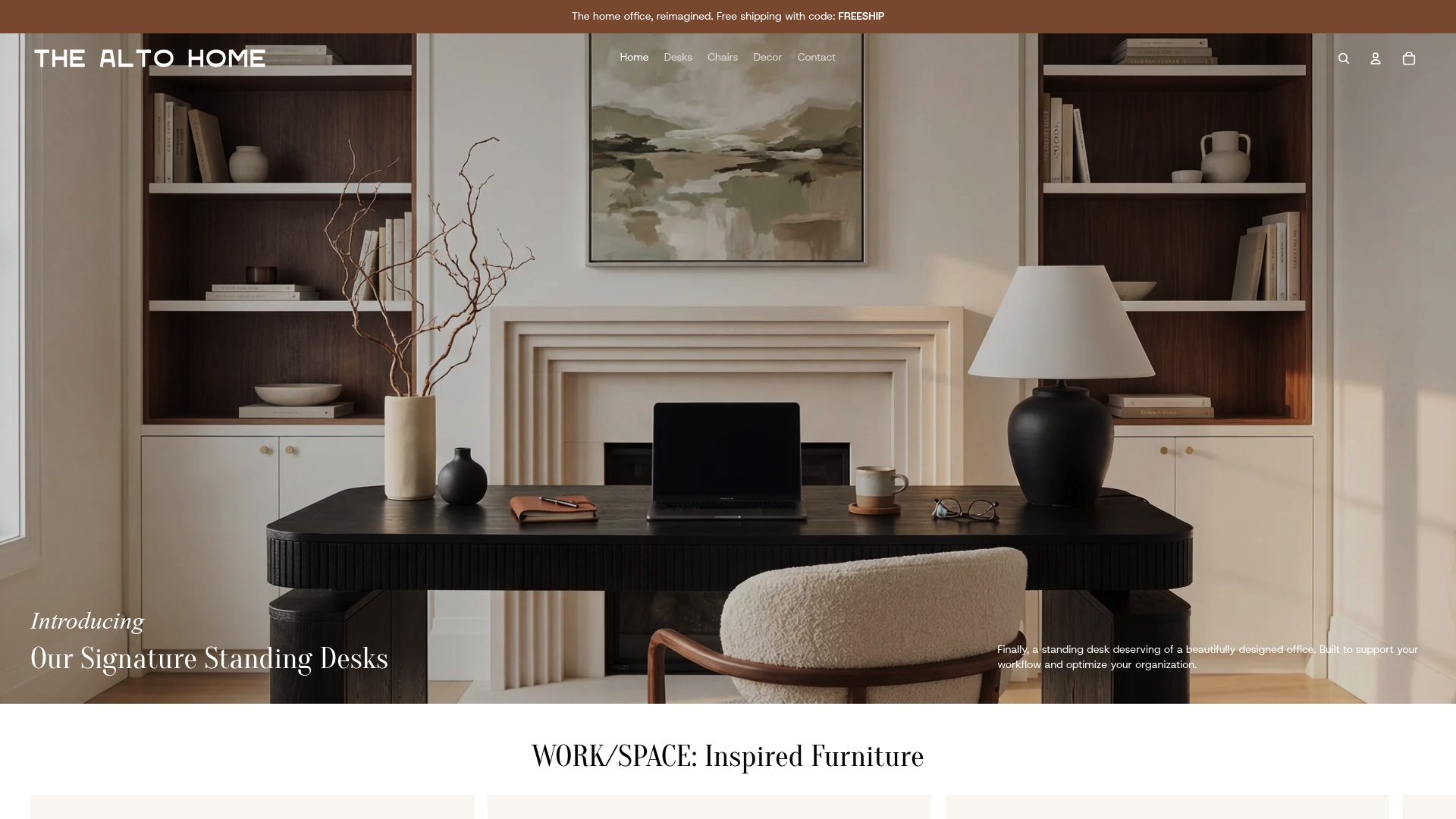
Each desk is designed to fit a real home office, not a corporate floor plan. The finishes blend with residential interiors, so the desk becomes part of the room rather than a piece of equipment dropped into it. The Gramercy Fluted Wood Standing Desk and the Tribeca Mid-Century Wood Standing Desk both support the sit-stand habits this article describes, with height ranges that accommodate both seated and standing ergonomic positions. The full collection of adjustable standing desks from The Alto Home is worth reviewing if you are building a workspace that supports both your health and your work.
FAQ
What is the role of standing desks in wellness design?
Standing desks reduce sedentary time and promote posture variation, which are the two core behaviors that wellness-focused workspace design targets. They work best as part of a broader environment that includes natural light, ergonomic seating, and biophilic elements.
How much does a standing desk reduce sedentary time?
A 2026 randomized controlled trial found that sit-stand desk use reduced daily sedentary time from 8.00 to 5.22 hours over six months. That reduction represents a clinically significant change in daily physical behavior.
How do standing desks improve wellness beyond posture?
Standing desks lower aldosterone levels, a hormonal marker linked to blood pressure regulation, and support cognitive focus by giving workers a physical option that aligns with high-demand mental tasks. The benefits extend from musculoskeletal health to cardiovascular and cognitive outcomes.
What is the best sit-to-stand ratio for standing desk use?
A 2:1 sit-to-stand ratio is the recommended starting point, meaning two hours of sitting for every one hour of standing. Progressing to a 1:1 ratio over 30 days builds tolerance and prevents the fatigue that causes most people to abandon standing desks.
Do standing desks work better with specific ergonomic furniture?
Ergonomic chairs with tilt mechanisms that promote micro-movement during seated periods directly complement standing desk use. Pairing a height-adjustable desk with a well-specified chair and an anti-fatigue mat creates a complete ergonomic setup rather than a single-point solution.
